Text size
THE THIRD NURSERY BOOK

THE SOGMARSH NURSERY BOOKS

A note on the use of these books — printed at the front of every edition, by order of the parish, whether anybody reads it or not.

From the nurse, to whoever comes after.

These are the tales we tell the small ones at bedtime. They are set down here because I am tired of being asked to remember them at short notice, and because I will not always be here to be asked.

You will notice they are not the tales they tell in drier countries. In drier countries the wolf is wicked and the fairy is sweet and the moral is that virtue is rewarded. We have tried that here. It does not survive contact with the weather.

Each one has a bit the children shout. Let them shout it. That is not the interruption. That is the tale. A story a child cannot join in with is a story a child is only being told at, and we have quite enough of that from the castle.


You will be asked why our tales end badly, or sideways, or in a damp bedsit with an argument about the sink. Here is your answer, and you may give it to any dry-country visitor who raises an eyebrow.

We do not tell our children that virtue is rewarded. We would be lying, and they would find out, and they would find out from the weather. What we tell them instead is this: the house will leak, the gift will have a clause in it, the wolf will very often be right, and the person who does the worst job in your life will never once be thanked unless you do it.

And then we tell them the other half, which the dry countries have somehow contrived to lose: that none of that is the end of anything. The wolf found the boy. The girl left the broth out. The dish and the spoon are still arguing, twenty years on, in the same small room, together.

A child who is told only that things go well will be broken by the first winter. A child who is told only that things go badly will not bother to try. We tell them both, in the dark, over the drip — and in the morning they get up and go out into a sinking realm and are, on the whole, remarkably decent about it.

They are not cheerful because we lied to them. They are cheerful because we did not, and they decided to be cheerful anyway. That is the only magic in Sogmarsh, and it is entirely home-made.

THE THIRD NURSERY BOOK

Things That Are Not There, and How to be Polite About Them. For children who have begun asking, and for the grown-ups who have run out of answers.

The first book corrected the beasts of the dry countries. The second set down the beasts of the wet country as they are. This third book is about a harder subject and a commoner one, which every child in this realm meets before it is eight: the things everybody talks about that are not, strictly, anywhere. A child who asks about these is not being difficult. A child who asks about these is doing the exact thing the Committee is paid for and does worse. This book is for answering them honestly, which mostly means saying "nobody knows" out loud and not being ashamed of it.

THE FIRST LESSON · <em>Some things are not there, and it is still rude to say so</em>

THE FIRST LESSON · Some things are not there, and it is still rude to say so

Here is the rule, and it is the whole book, so you may stop after this page if you like:

A thing can be untrue and still be somebody's.

If you tell a person that the thing they have believed all their life is not there, you have not given them a fact. You have taken something away and put nothing in its place, and that is not cleverness, it is just tidying up in a house you do not live in.

So: you may think whatever you like. You may count whatever you like — counting is never rude. But when a person tells you about a thing that is not there, the correct answer is not "that's wrong."

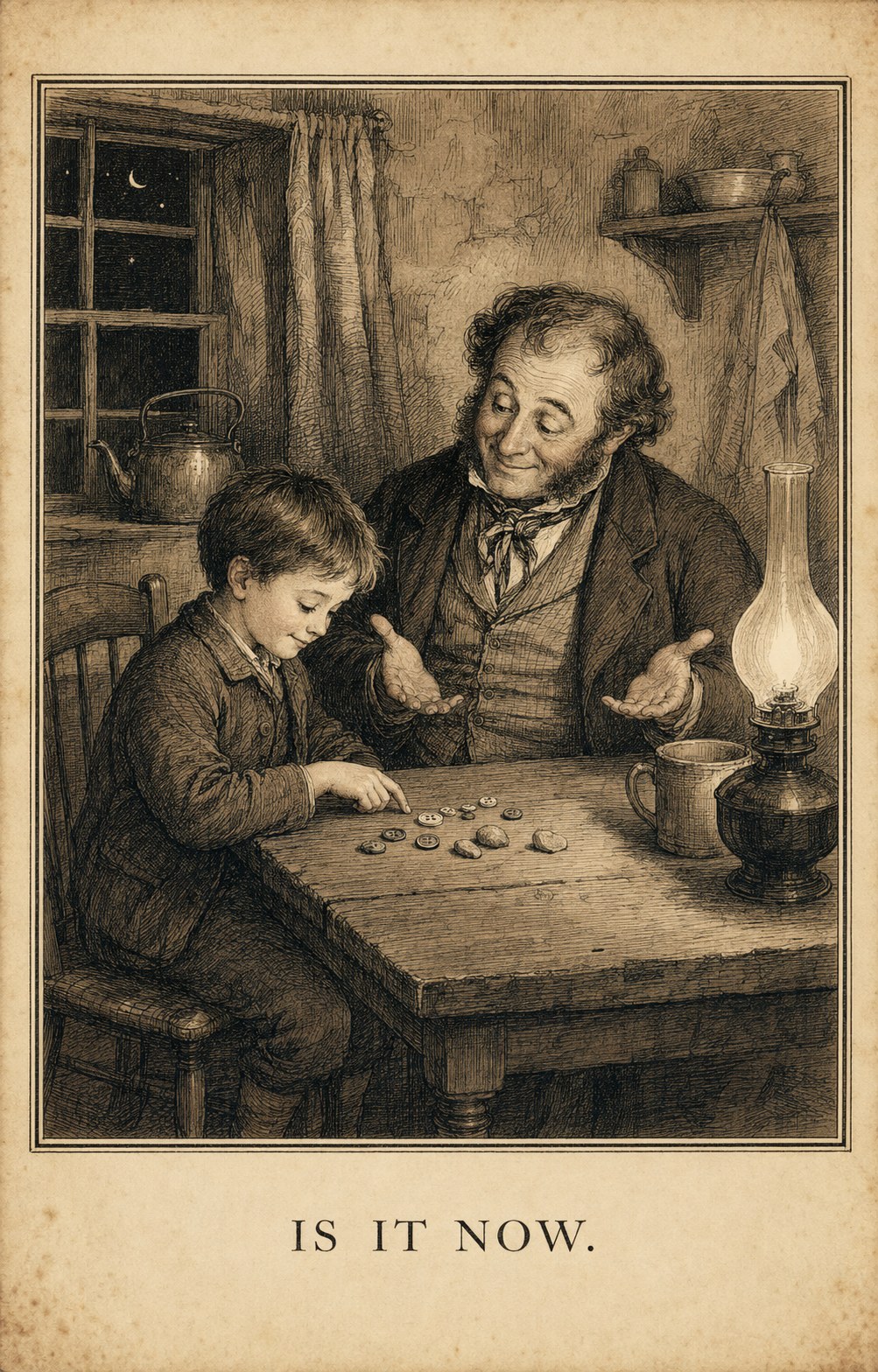
The correct answer is "is it now."

Practise saying it kindly. You will need it a great deal.

1 · THE FAMILY THAT DOES NOT EXIST

1 · THE FAMILY THAT DOES NOT EXIST

There is a family in this realm that is not sure it is a family, and would rather not be asked.

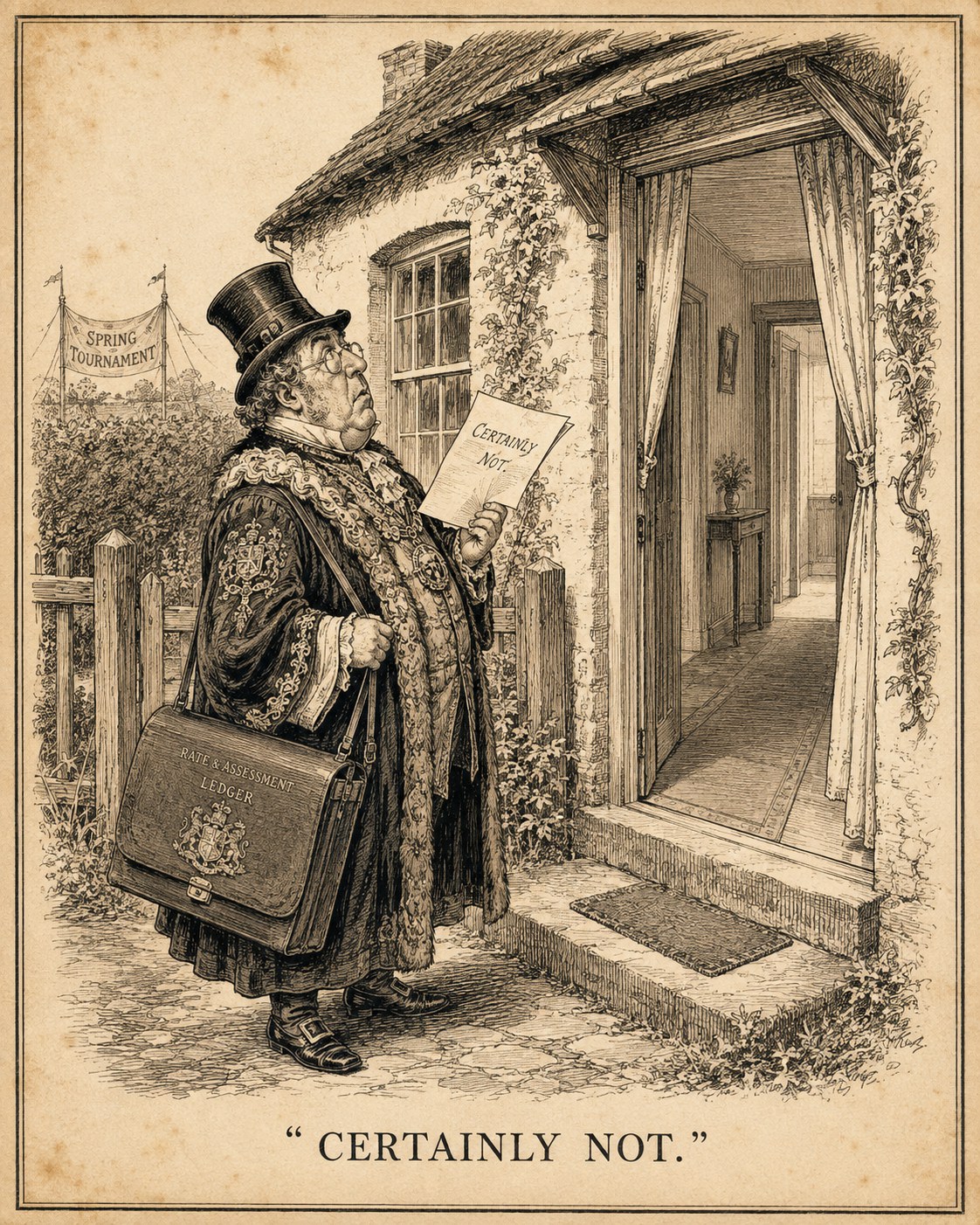
They are called the Havers. When the Crown wrote to them, a long time ago, to ask whether they existed — because the Crown wished to tax them, which is the usual reason anyone asks anybody anything — the Havers wrote back two words, and the two words are the finest answer in the history of this kingdom:

"Certainly not."

The Crown has never been able to get past it. Nobody has. They have been probably hypothetical for three hundred and fifty-one years, and they pay no tax, and every spring they hold a tournament.

What to do if you meet a Haver. You will not. That is rather the point. But if somebody tells you they have, do not say there's no such family. Say "is it now," and ask what they were wearing.


2 · THE GOOSE THAT WINS

2 · THE GOOSE THAT WINS

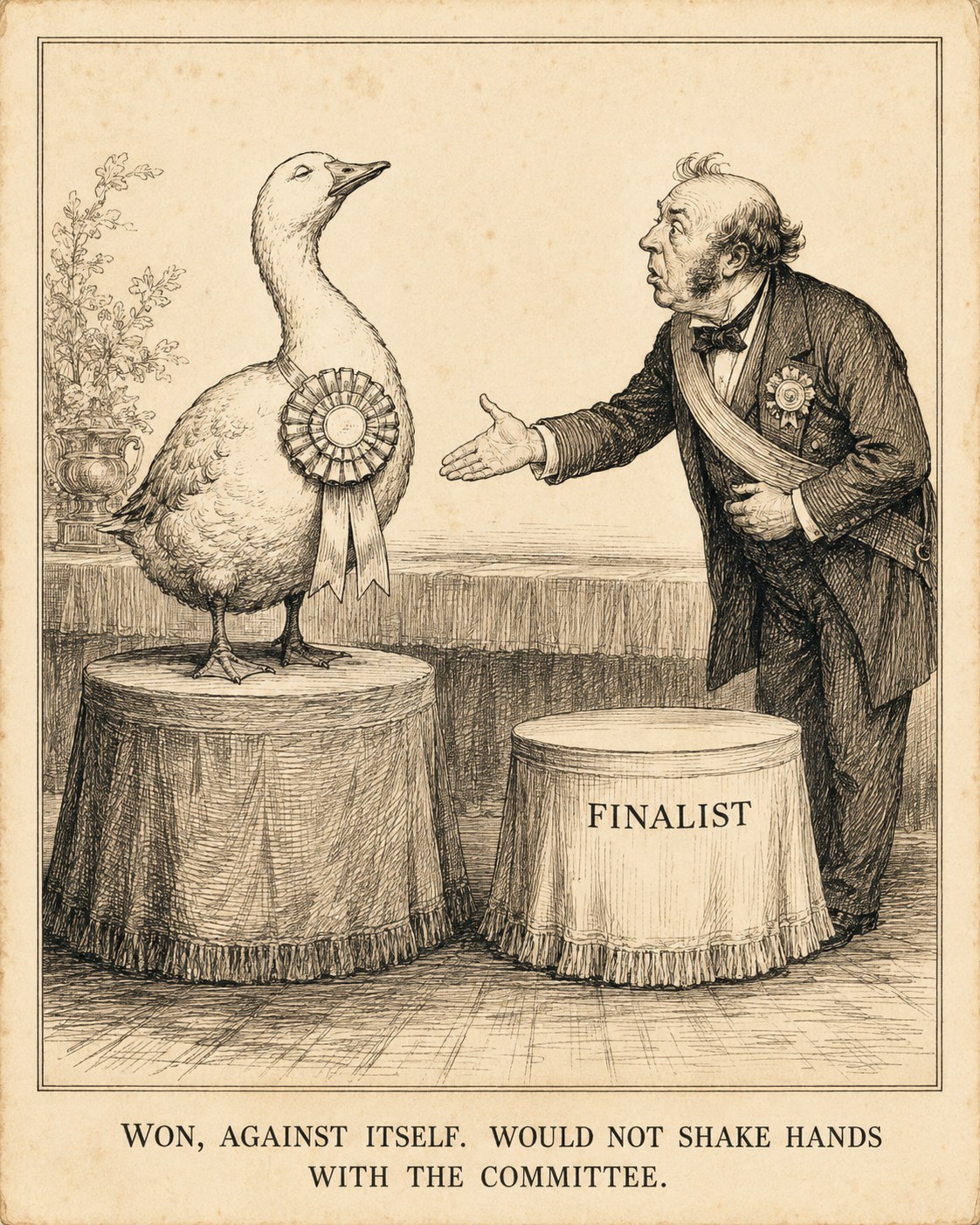
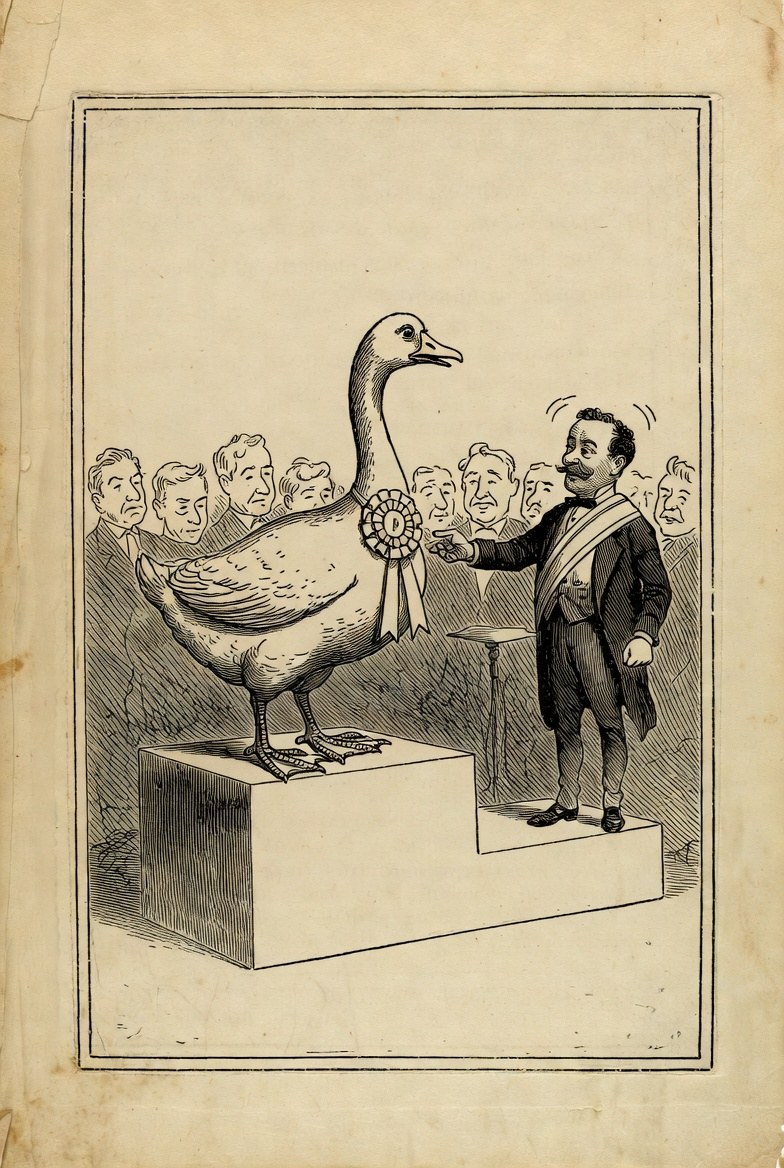
The Haver Goose Tournament has been won every single year since 1672 by the Goose.

Including — and you may check this, it is written down — the year it reached the final against itself, and won, and would not shake hands with the committee afterwards.

Nobody has beaten the Goose. Nobody is going to. Several people have tried and they are all in the records, in small letters, under nowhere.

The lesson. Some contests are not there to be won. They are there so that everybody has somewhere to be in the spring. If you enter, enter cheerfully, and lose graciously, and do not — this is important — do not point out to the Goose that the rules are ridiculous. It knows. It wrote them.


3 · THE MAN ON THE FAR SIDE OF THE ROUND

3 · THE MAN ON THE FAR SIDE OF THE ROUND

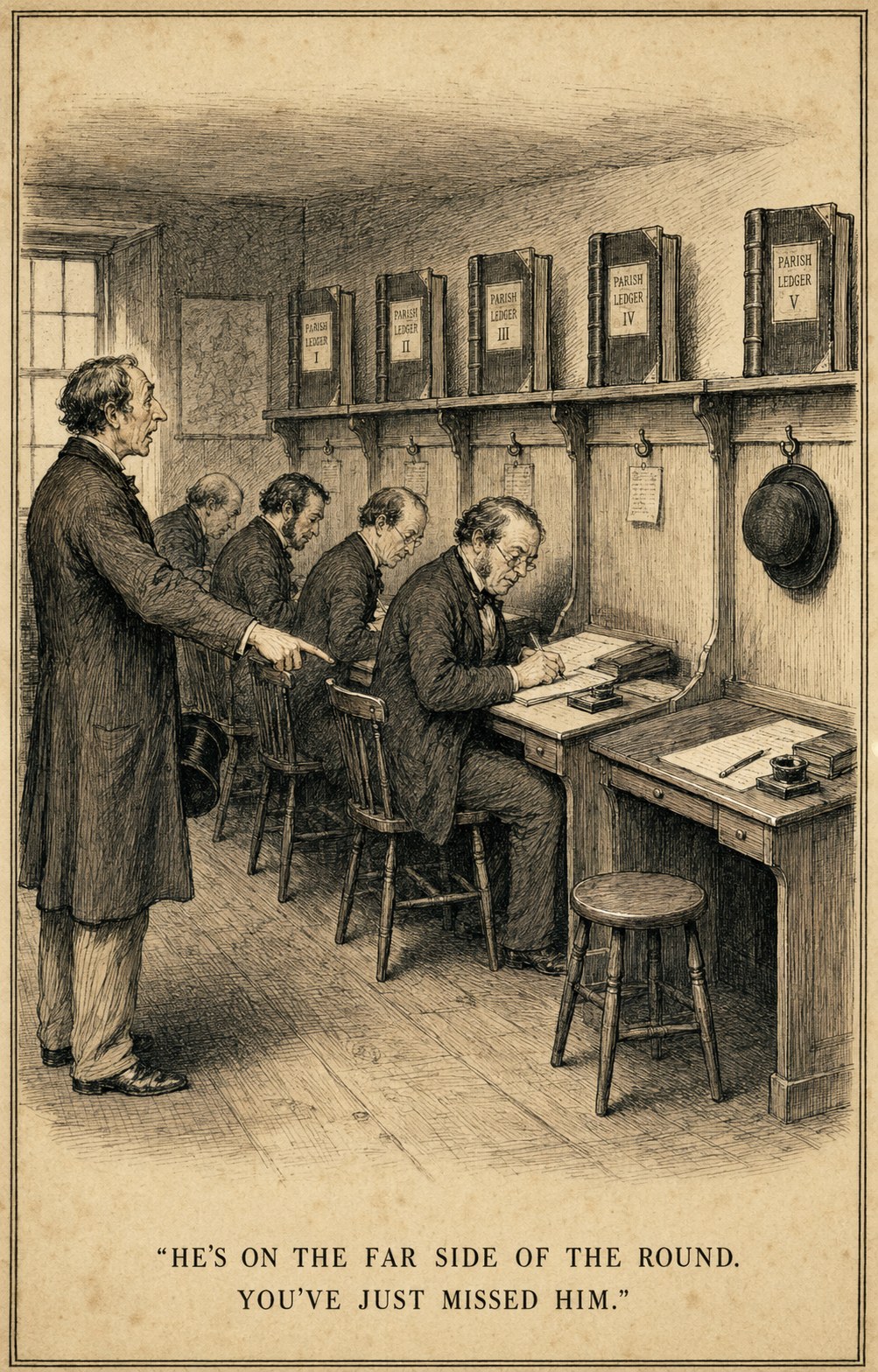
If you ever go into an office in this realm and count the people, and then count the ledgers, you will sometimes find that there is one more ledger than there are people.

Do not be alarmed. Ask about it, and somebody will tell you, without looking up, that the extra one belongs to a man who is on the far side of the round.

He came through on Tuesday. He is stopping over at Nettlewick. You have just missed him.

Is he there? No. Should you say so? Ah.

Here is the difficulty, and it is a very grown-up difficulty for a nursery book, so read it twice: the extra ledger is what makes all the other ledgers add up. Take it out and eight honest people find that two hundred years of their work no longer balances. So the answer to "is he there?" is no, and the answer to "should you strike him out?" is a completely different question that a great many clever people have got wrong.

The lesson. Before you remove a thing that is not there, find out what it is holding up.


4 · THE FIELD NOBODY CAN FIND

4 · THE FIELD NOBODY CAN FIND

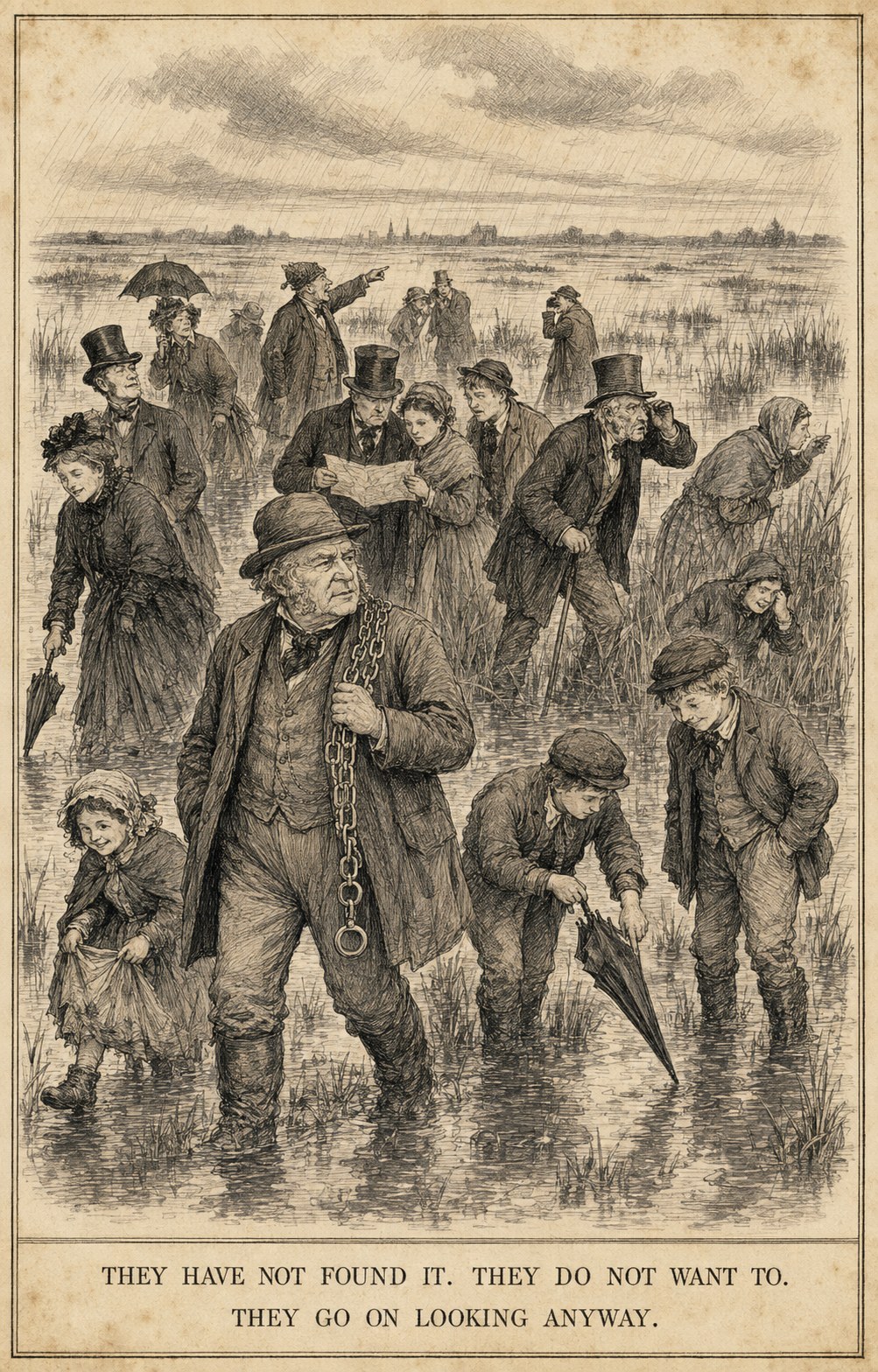
Two families in this realm have been arguing for four hundred years about a field.

They have the papers. Both of them. The papers are beautiful and disagree in eleven places. The only trouble is that the field itself has gone — flooded, or shifted, or simply mislaid by a realm that will not hold still — and no one has been able to stand in it for about two centuries.

So twice a year, in April and October, both families walk out together with a chain and look for it.

They have not found it. They are not going to find it. And here is the part you should keep, because it is the kindest thing in this whole book: they do not want to. If they found it, the Court would divide it in two, and it would all be over, and they would have nothing to do together ever again.

The lesson. Some things are best kept unfound. And the wise go on looking anyway, twice a year, in the rain, together.


5 · THE EMPTY PLATE

5 · THE EMPTY PLATE

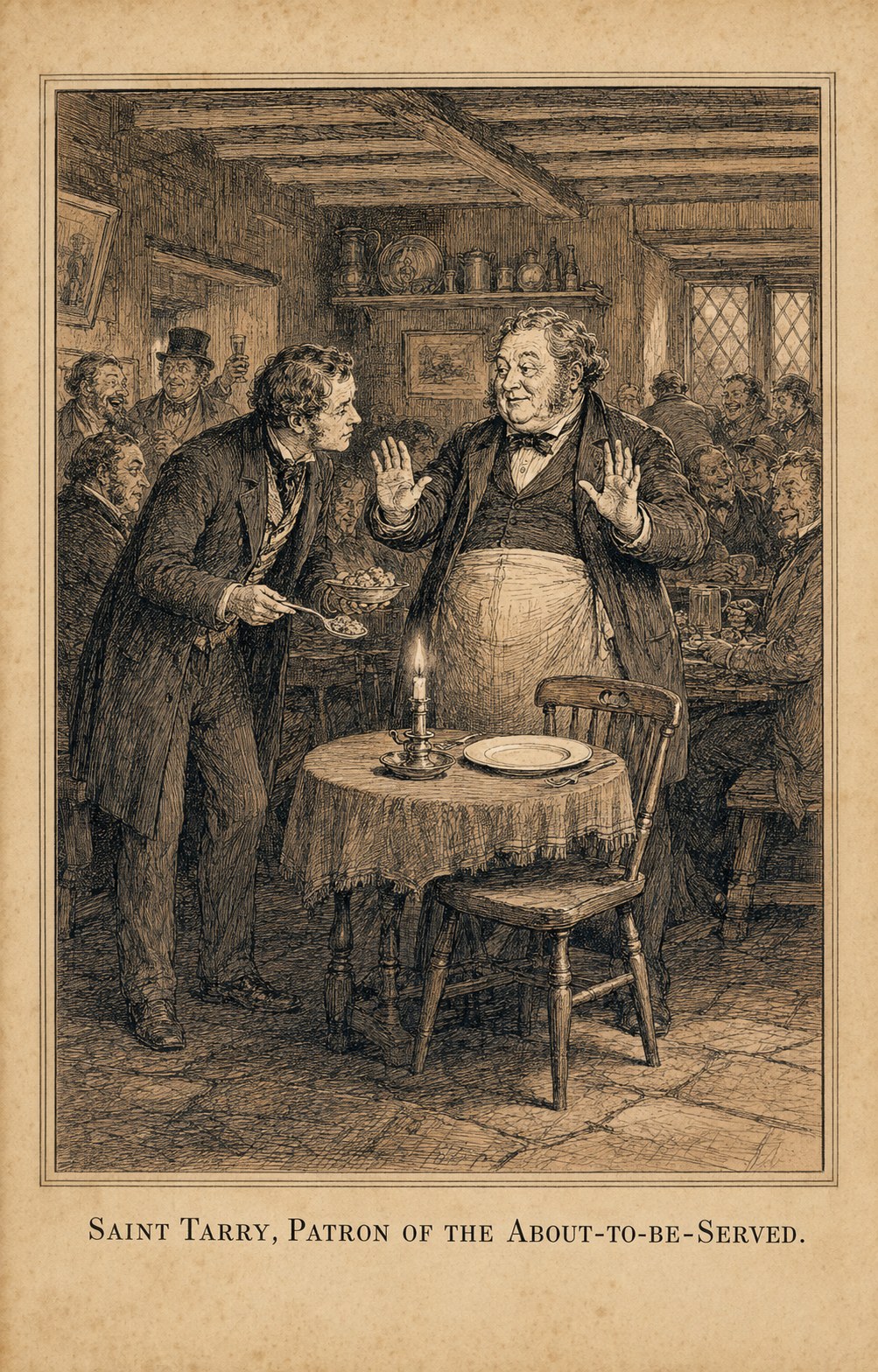
At an inn in the capital there is a chair nobody sits in and a plate nobody eats off, and the plate is always clean.

It belongs to Saint Tarry, who is the patron of the about-to-be-served. Not the fed. Not the hungry. The ones whose dinner is nearly coming. This is, if you think about it for a moment, most people, most of the time, and it explains rather a lot about this realm.

Somebody filled the plate once. The parish was appalled and emptied it again, reverently, because a Saint Tarry who has been fed is no use to anybody: hope you have already got is not hope any more.

The lesson. "Just about" is the grade of hope in this realm. It is not much. It has kept more people alive than the harvest.


6 · THE ONE WHO CAME BACK

6 · THE ONE WHO CAME BACK

This is the last and the biggest and the one your grown-ups may not want to do, so be gentle.

A long time ago some people went east, to the edge where the maps stop, and did not come back.

Ask in one parish and they will tell you the name of the man who did come back — the one who came home wrong and does not talk about it. Ask in the next parish and they will tell you a different name, just as certainly. Ask in nine parishes and you will get nine, and every single person will be telling you the truth as they have it.

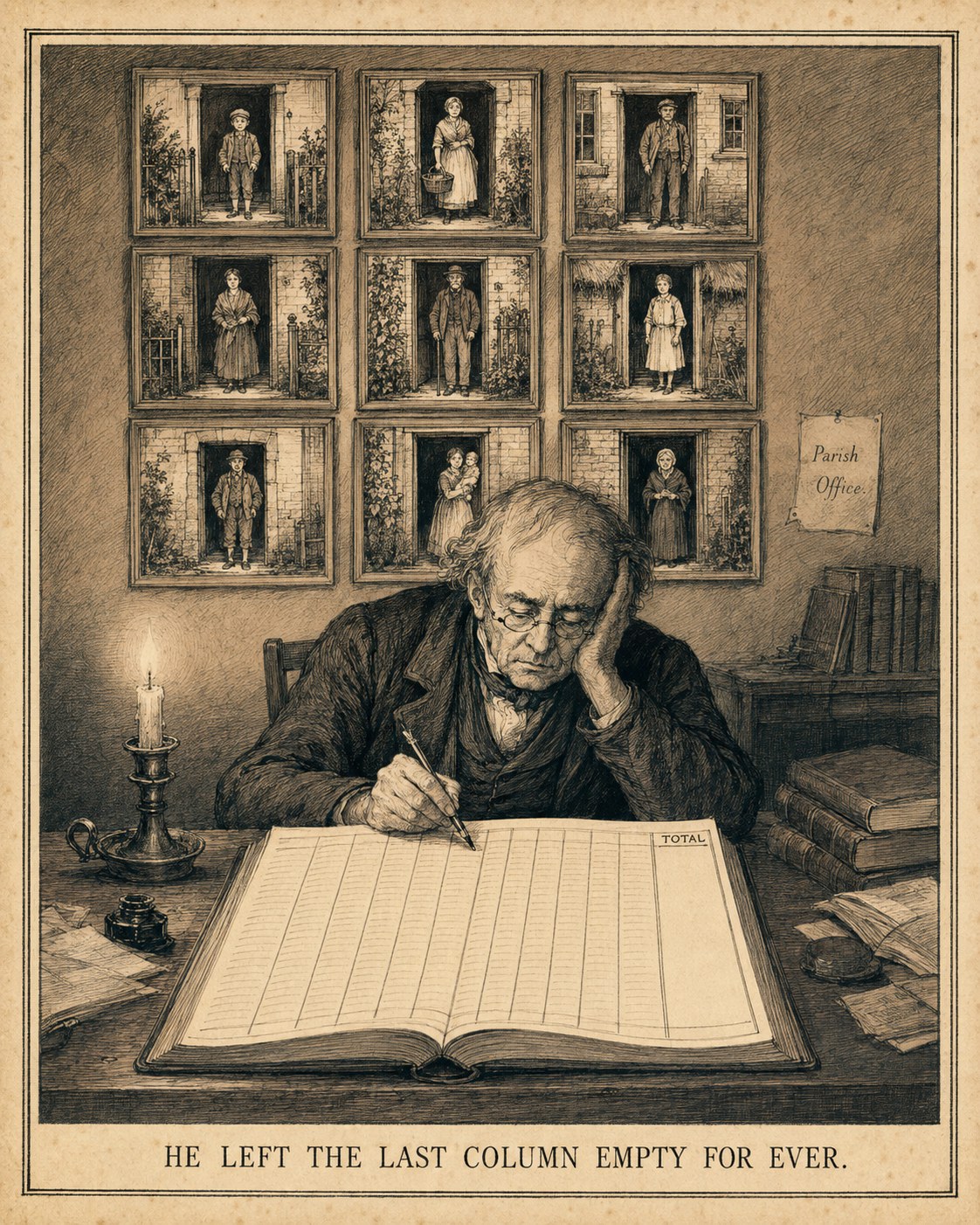
A clerk once tried to work out which one was right. He ruled a beautiful sheet with nine columns and a tenth for the total, and he went round all nine parishes, and then he sat down and could not fill in the last column, and never did, and left it empty for ever.

Why? Because he worked out that he was not counting survivors. He was counting parishes that needed one. When people are lost somewhere that never gives an answer, a place has to make its own ending, or it cannot get up in the morning.

The lesson, and the whole book in one line: when you find nine answers and they cannot all be right, you have usually found out something truer than which one is — and the tenth column is allowed to stay empty.


A NOTE FOR THE GROWN-UP READING THIS ALOUD

You will be asked, at about the third page, "but is it really there?"

You may say no. That is allowed. This book is not asking you to lie to a child, and a child who is lied to at seven does the arithmetic at eleven and trusts you less for ever.

What this book asks is that you say the second half too, which is the half most grown-ups leave off:

"No. And a great many people have got through some very hard winters on it, and that is not nothing, and we are going to be polite about it."

Then let them go and count something. It is the best thing in the world for them.


Compiled for the nursery shelf; the beasts are in Books One and Two, where they belong. There is no beast in this book at all, which several children have complained about, and which is itself the lesson, if you are the sort of child who enjoys that — and if you are, this realm has an office waiting for you, and no wage, and mostly liability.