The Bells of the Cold Coast
The Tales
Tale 27THE BELL OF SODDEN BOTTOM
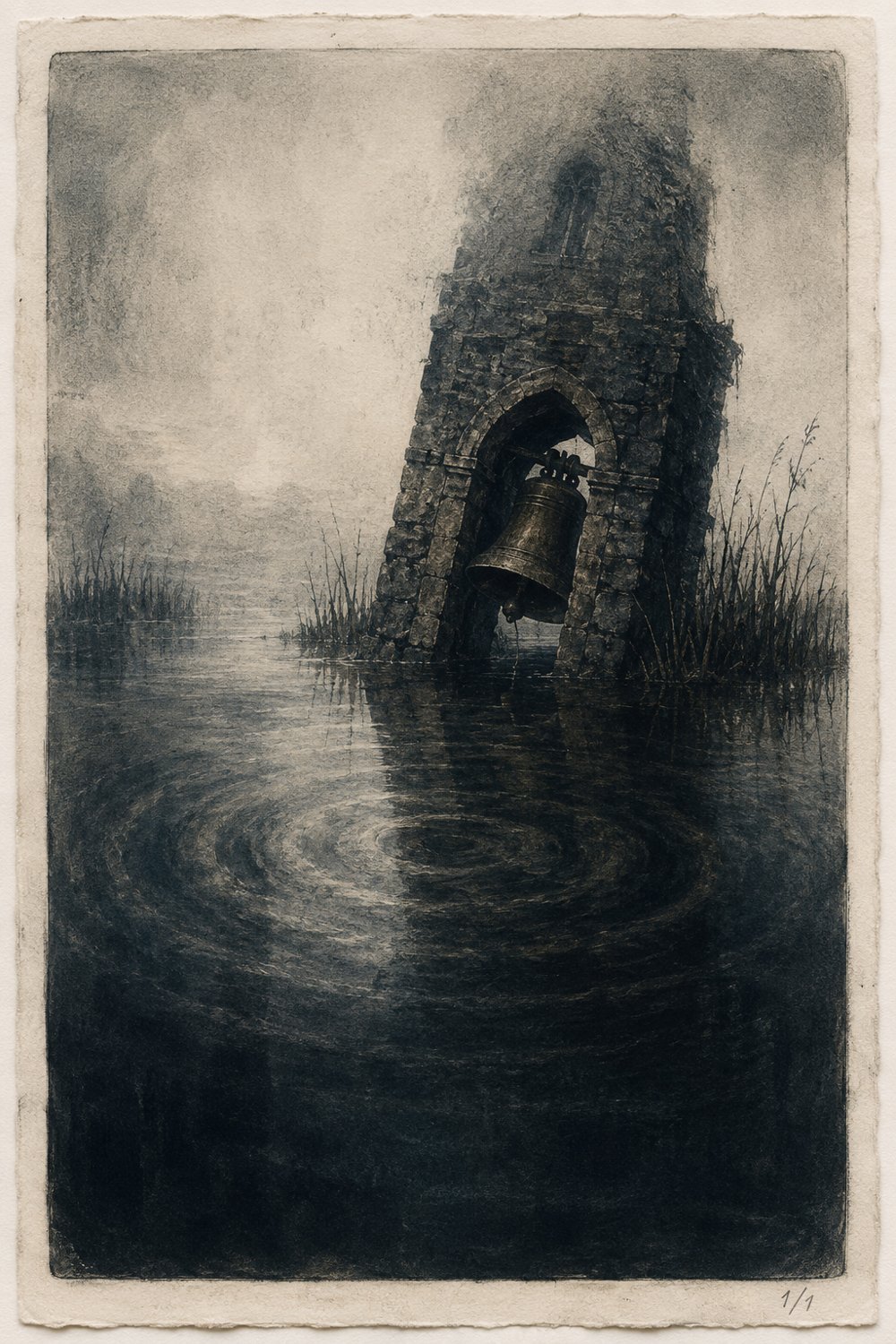
I hang in the chapel tower of Sodden Bottom, which is the lowest and the wettest parish in all Sogmarsh — lower than the Drownings proper, lower than the water table, lower than good sense, and lower every single year — and I mean to tell you the one thing a bell is actually for, because I have had six hundred years of hanging here in the wet to work it out, and I had it wrong for most of them.
When I was cast I rang out over dry hayfields. You will have to take my word for that, because there is not a soul left alive who saw them, and the fields themselves gave up and went under so long ago that the eels hold the freehold now. But I rang high, once — a good bronze note that carried three miles on a clear morning, and I was very proud, in the way a young bell is, which is insufferably.
Then the water came up. Not in a rush — nothing in Sodden Bottom does anything in a rush except drown — but a finger's width a year, patient as rent. My tower sank to meet it. The churchyard learned to breathe through a snorkel. And one wet spring, at the top of the high mire, the flood climbed over my lip while I was ringing Evensong, and I discovered what I sound like underwater, which is a cow lowing into a wet pillow at the bottom of a well.
This caused difficulties.
Chiefly, no stranger could any longer tell the difference between me calling the faithful to worship and me simply drowning. A visiting deacon from a drier country, hearing my muffled Sunday bloop rolling up through the floodwater, organised a full rescue — ropes, a boat, a man with a grappling hook and a great sense of occasion — for what was, in point of fact, the eight o'clock service. The congregation had to be fished out one by one and assured that they had not been sinking; they had been praying, which in this parish looks identical, and feels warmer.
I found it humiliating. I am ashamed to say how long I found it humiliating.
Because it got worse, you see. At the very height of the mire, when the water stands over the whole nave and the curate delivers the sermon from a coracle, I cannot be heard above the surface at all. I toll, and the sound goes sideways — out into the flood, into the reeds, into the drowned dark — and not one note of it ever reaches an ear held up in the dry air. I would ring, and ring, and ring my bronze heart out into the water, and up above there would be nothing but the drip and the frogs and the vast grey patience of the rain.
And I thought: well, that is the end of me, then. A bell that cannot be heard is not a bell. It is a lump of wet metal with opinions above its station. I very nearly stopped. One black night at the top of the flood I hung there and thought, why bother; there is no one to hear; and I rang anyway, only out of six hundred years of habit, down into the water, to nobody.
And they came.
The whole parish. Wading. In the dark. To a bell they could not hear.
I did not understand it. I am a bell; understanding is not my long suit. But they came slopping up the drowned lane with their lanterns held high and their skirts held higher, the whole soaked congregation of Sodden Bottom, gathering to a summons that had not made a single sound anybody owned an ear for.
It was old Widow Sump who explained it to me, though she did not know she was doing it, being deaf as a post herself and had been for sixty years. She had never once missed a service in her life. And when the new curate — gently, thinking her afflicted — asked her how on earth she always knew the hour, she looked at him as though he were a simpleton who had wandered in out of the dry, and she said:
"I feel thee, bell. I feel thee come up through the floor. The puddles know afore the ears do."
And that is the truth of it, and it took a deaf woman to hang it on me.
The people of the Drownings do not pray with their ears. They cannot afford to; ears are the first thing the flood takes. They pray with the soles of their feet, standing in the cold water in the dark, and when I ring down into the mire they feel me come up through the flood and into their boots and into their bones — a tremble in the water that has only one meaning, and the meaning is here, and now, and together, come. Not a sound. A summons you attend by standing in it.
I had spent five centuries mortified that I could not be heard, and all that while I was being felt, which is the deeper thing, and I was too proud to notice.
So I do not stop now, ever, at the top of any mire, however black the night and however empty the air. I ring down into the water on purpose. Because in a parish that is sinking — in a whole realm that is sinking, if you want the truth of it — the one fixed thing, the one point that does not move, the thing that says you are not lost, you are not alone, it is time, wade to it — that is worth more than being heard. That is worth a great deal more than being heard.
They call me the drowned bell, up in the dry countries, when they mention me at all, which is seldom, and always with a little shudder. Let them. I am not drowned. I am attended. There is a difference you only learn at the bottom, and it is the whole of my sermon, and I ring it every evening into the flood, and every evening the water carries it home.
The moral, from the bottom of the mire: the world will tell you that a thing unheard is a thing wasted, and the world says it from somewhere dry. But down where it is deep and dark and everything you built is going under, the faithful learn to listen with their feet — and a bell you cannot hear will still call them home, so long as it has the heart to keep ringing into the water for a congregation it will never once get to see arrive.
Tale 29THE BELL-BUOY OF THE FIRST ANCHORAGE
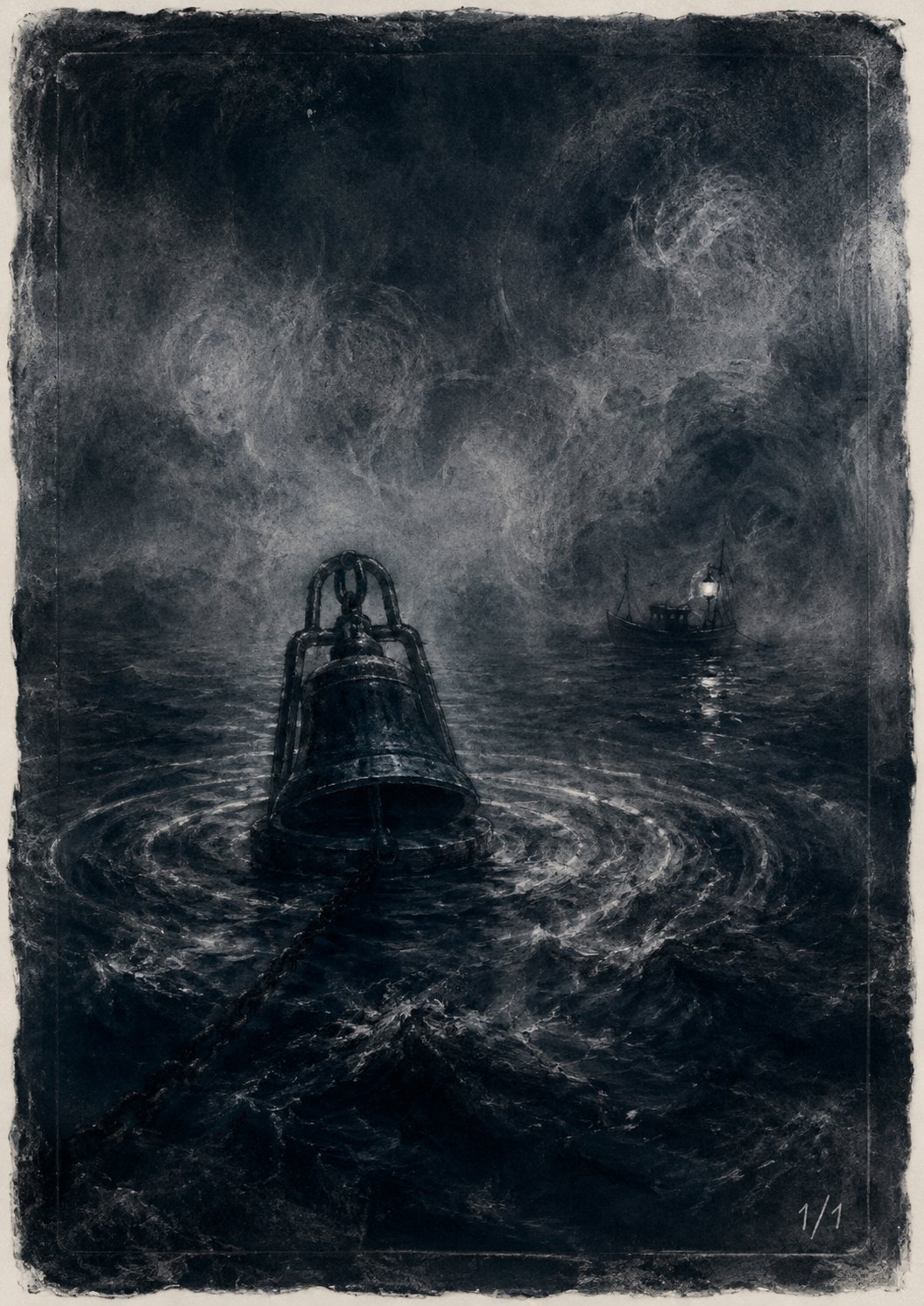
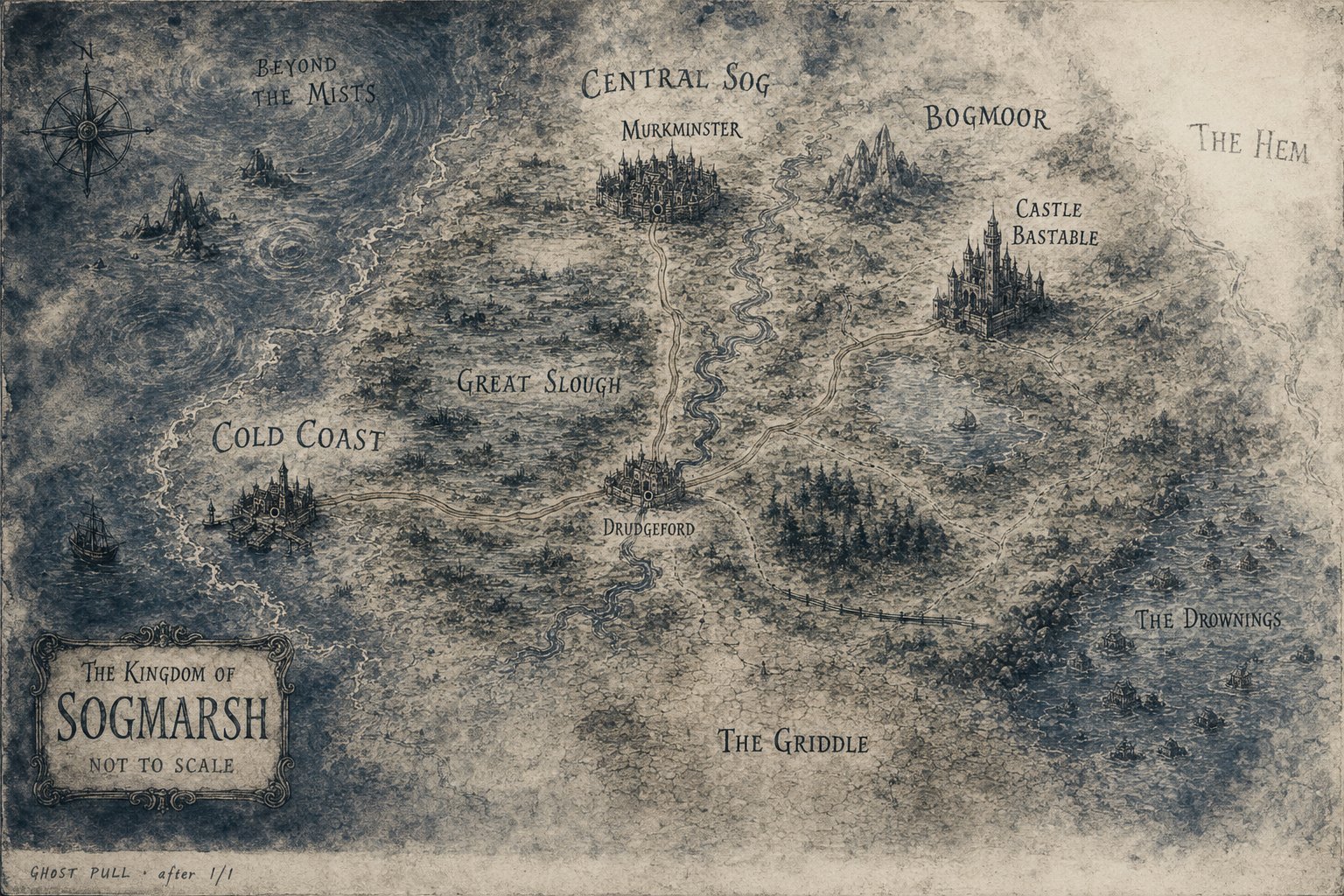
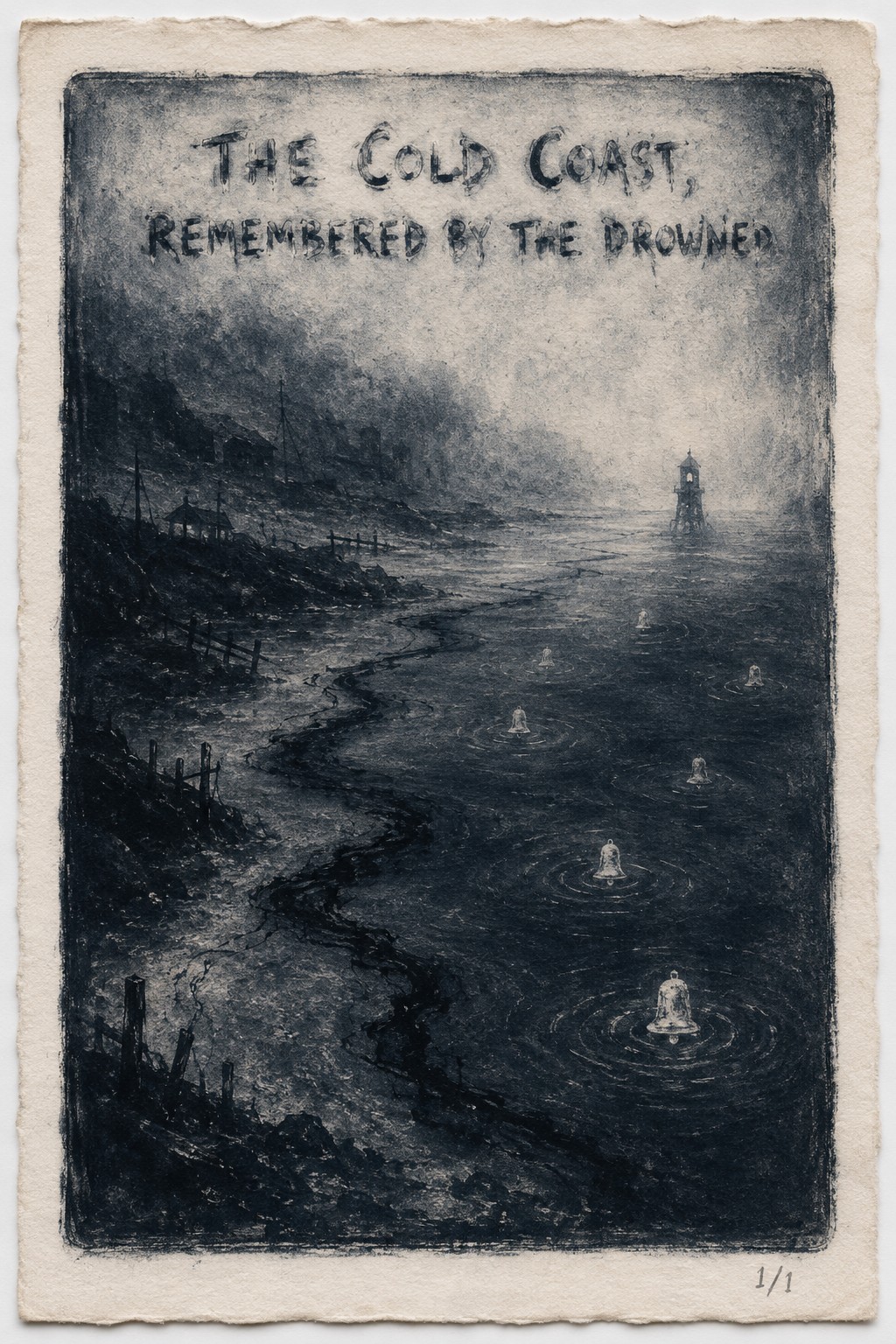
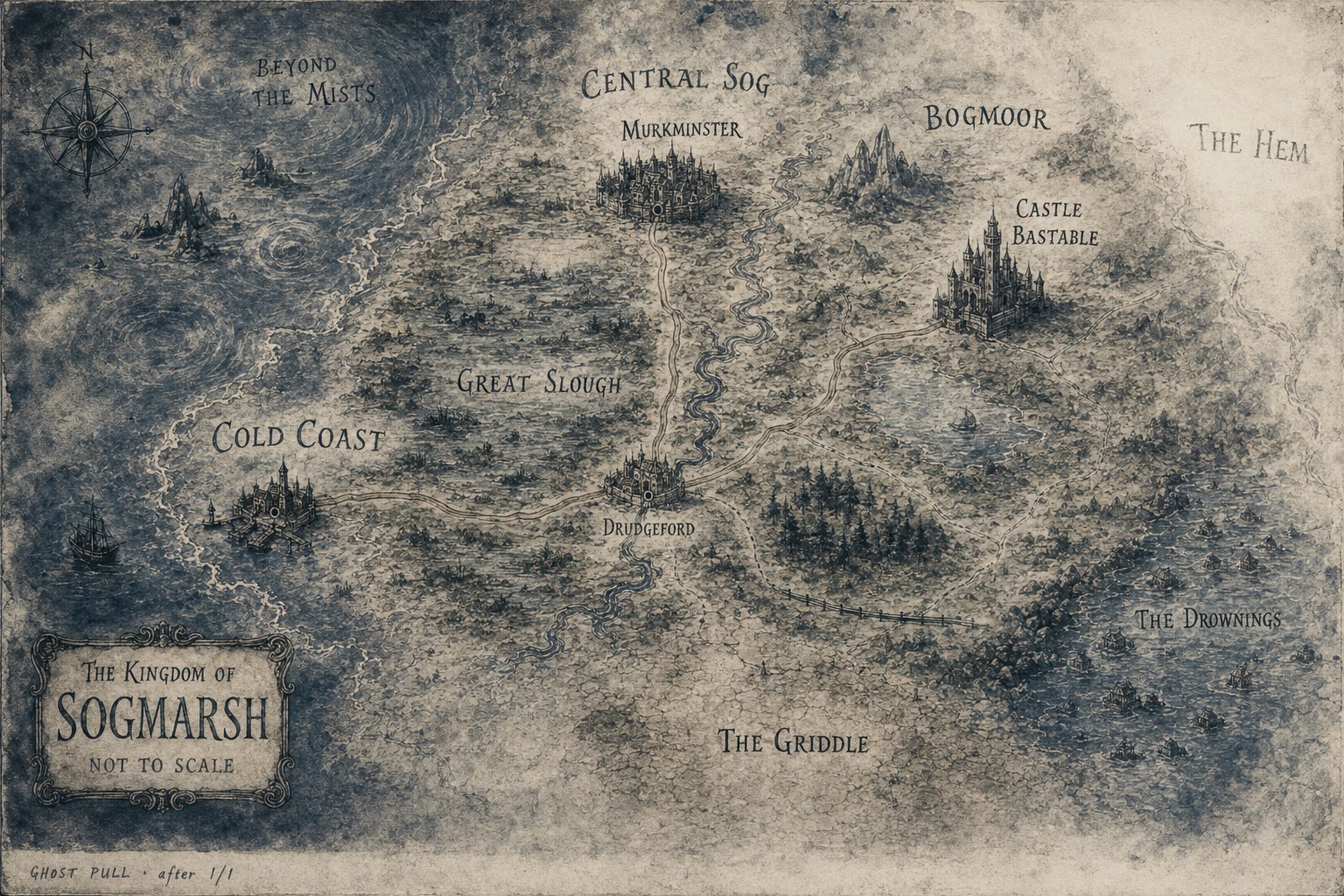
I am a bell-buoy, rusted the colour of old blood, and I ride the grey swell south of Saltgate, moored over the ruined First Anchorage — which is to say, moored over a town. There is a whole town down there under the cold water, the first place the exiles are supposed to have landed, drowned so long ago that the records of the arguments about it are older than the arrival itself, which is very Sogmarsh, and I shall not attempt to explain it.
Down in the drowned town there is a drowned chapel, and in the drowned chapel there is a bell.
That bell and I have an arrangement.
I ring on the swell — that is all I do, all day and all night, a slow iron clong as the sea lifts me and lets me down. And I ring the hours. But here is the thing that has driven three generations of harbour- masters to distraction and one to drink: I ring them half a beat behind the living church up on the Saltgate front. Always have. Cannot help it; the sea sets my tempo, not the sexton. So the two bells fall across the water at each other, the quick living one and the slow drowned one, and no soul on the whole Cold Coast has known for certain what o'clock it is in four hundred years. They have stopped minding. On the Cold Coast, "about the time the bells disagree" is considered a perfectly good appointment.
The dry-country folk who come to gawp — and they do come, in the summer, when the road is passable — want something else from me entirely. They stand on the cliff and they want. They want a drowned monk. They want a sea-ghost with weed in its hair. They want a judgement: a town sunk for its wickedness, a moral they can carry home and feel improved by. They ask the harbour-master, and the harbour-master, who keeps the Bell-Tally and has no time for tourists, tells them the truth, which is that the town drowned because the ground was low and the sea was high, and that this is the entire story, and that the sea passes no judgements because the sea cannot count. Then he charges them a penny to hear it, which is a judgement, of a mild and local kind.
But they have the wrong end of me, the gawpers, and so did I for the first century or so, when I thought my whole purpose was to warn the living off the shoal.
I do not warn anybody. Nobody sails the shoal; they have known about it since before I was forged. So what, I used to wonder, is a bell for, moored over a place with no living soul left to call?
Then one flat, black, freezing night, with no ship out and no ear on the water and no reason under heaven to bother, the drowned bell below me rang.
It does that, before the worst storms — rings of itself, down in the chapel under the sea, and the harbour- master hears it come up through the water and marks it in the Tally, and battens the town. But that night it did not ring for a storm. There was no storm. It simply rang, once, the way you might say a name into an empty room just to hear that the room is still there.
And I understood, at last, the whole of my arrangement.
It rang, and — half a beat behind, because the sea sets my tempo — I rang back.
That is what I am for. Not to warn the living; the living are fine, the living have the church on the front and the fire in the Cold Anchor and each other. I am for the drowned. I am the answer from the surface to a town that has been ringing up out of the dark for four centuries — ringing, I think now, not to threaten anybody, but only to ask the same thing the drowned have always asked, which is: is anyone still up there? does anyone still keep the hours? are we entirely forgotten?
And every hour, half a beat behind, I tell them: no. not forgotten. still here. still counting. sleep on.
The living time and the drowned time, a half-beat apart, across the cold water, forever — so that neither the town above nor the town below is ever, on any hour of any night, entirely alone.
Let the tourists have their sea-ghost. I have better work than haunting. I have a whole town to sit up with.
The moral, from the end of the mooring-chain: not every bell rings to warn the living off the rocks. Some ring for no ear at all but the ones under the water — to keep the hours for the forgotten, and to answer, half a beat late and every single hour, the oldest question the lost ever ask: is anyone still there? The kindest thing a bell can say is simply yes.

Tale 30THE COLD ANCHOR'S SIGN
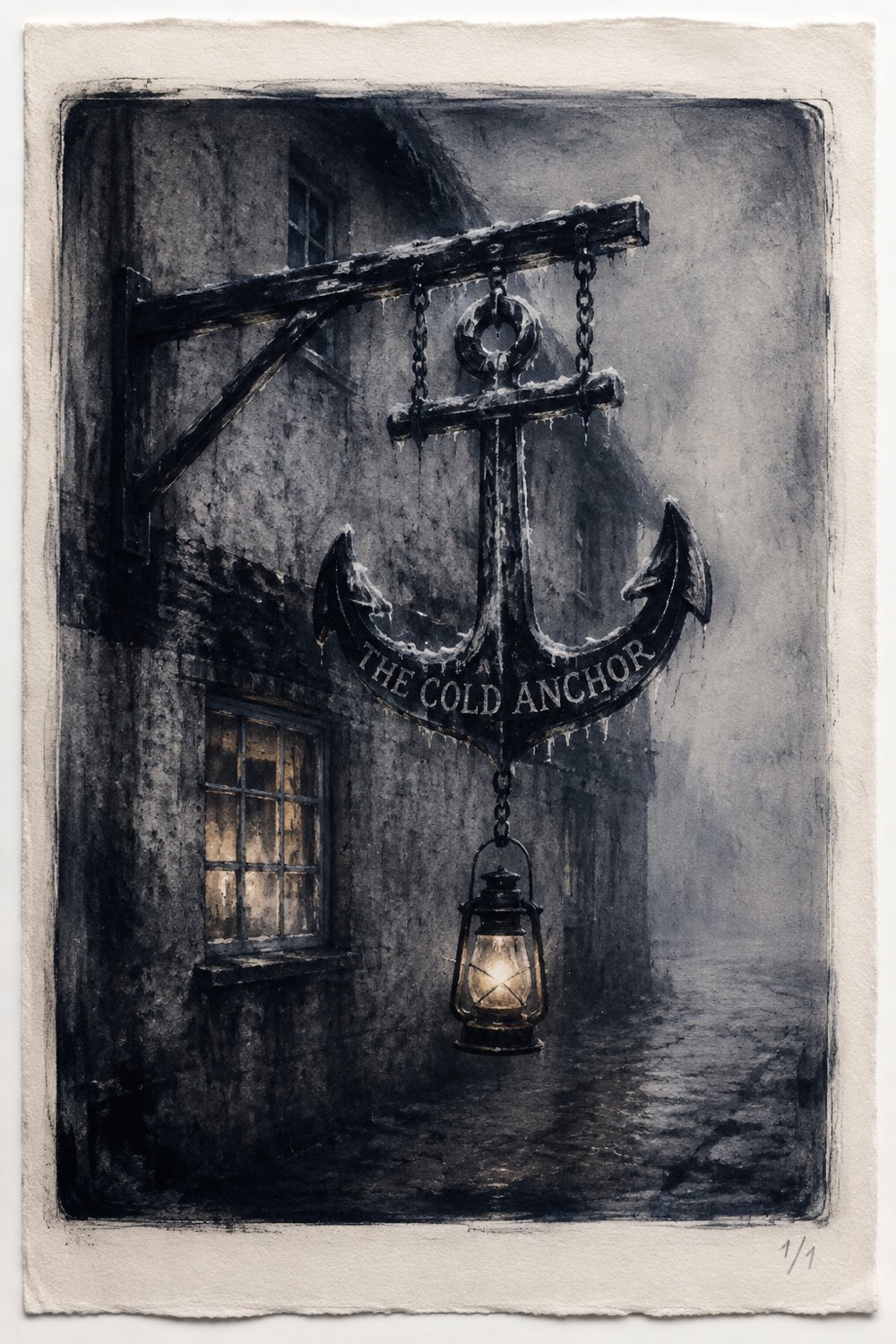
I am an anchor, and I hang above the door of the Cold Anchor inn, up the coast from the Saltgate docks where it is quiet, and I am, if you want the plain truth of it, the worst inn-sign in the realm at the one job an inn-sign has, which is to hang still and be looked at.
I cannot hang still. I hold.
That is what I was made for and I have never once been able to stop. All day and all night I haul on my bracket, leaning out over the door as though there were a gale, as though there were a hull under me dragging for the deep, as though everything depended on my grip — and there is no gale, and there is no hull, and there has not been for a very long time. I have pulled the whole north wall of this inn a full degree out of true. The landlord gave up straightening it about thirty years ago. He wedged the door to still open, poured himself a measure, and said, "Let it hold, then, if holding's all it knows," which was the kindest thing anybody had said to me in a century, and I have leaned a little easier since, though I have not stopped. I cannot stop.
Because I came off a ship.
She was called the Fair Return, which the coast now considers the blackest joke in its long book of black jokes, and she sailed out past the Isles and on toward the Hem — the fog-rim, the edge, the place where the maps give up and the roads go to nothing — after a cargo somebody in a warm office had decided was worth it. Seven men crewed her. She did not come back. Nothing came back. Only I did, cut loose and washed in on the tide three weeks later, cold and alone, the single thing the sea saw fit to return of the Fair Return.
They should have melted me down. Iron is dear on the coast. Instead the landlord — the grandfather of the one who wedged the door — hung me over his lintel, and there I have hung, holding, ever since.
And here is what the Cold Anchor does, and has always done, and will do until the sea takes it too.
There are seven stools along the far wall that nobody sits on. Every evening the landlord pours seven measures and sets them under those stools, and lets them stand, and pours them out again cold at closing, and the next night pours seven more. Seven men who have no graves — no stones, no churchyard, no plot in any ground, because the Hem does not give back what it takes and there was nothing to bury even if it had — have, instead, this: a warm room that keeps their places, a measure poured against their coming, and an iron anchor over the door that will not, that cannot, that has flatly refused for a hundred years to let go of them.
Once a year, on the night she sailed, the landlord names them. Just the seven names, out loud, into the warm. And every year, on that night, I haul hardest on my bracket, and the old north wall groans, and the regulars look into their cups and nobody — nobody in that whole low warm room — says it is only the wind.
Because they know what I am doing. I am doing the one thing I was forged for and the only thing I have left. Somewhere out past the Isles the sea has seven men and will not give them up. So I hold what I can reach. I hold their places. I hold their names above a lit door on a dark coast, and I lean out into a gale that ended a hundred years ago, and I grip, and I grip, and I grip.
An anchor cannot bring a ship home. I know that now; I have had a century to learn it. But it can refuse, with its whole iron heart, to admit that the ship is not coming — and on a coast that loses so many, to so much water, that refusal is not foolishness. It is the last kindness the land has to offer the sea's unburied. It is a grave for men who never got one. It is holding on, which is the only prayer iron knows.
The moral, from over the door: an anchor's whole religion is holding on to what is already gone — and on a coast that keeps no graves for the ones the sea takes, that stubborn, useless, unbreakable grip is not a failing. It is the only headstone the drowned will ever have: a warm room, a measure poured, their names said once a year into the light, and a rusted iron thing over the door that will never, ever let go.