Part I · The bootprint at the crossroads
A road with two opinions
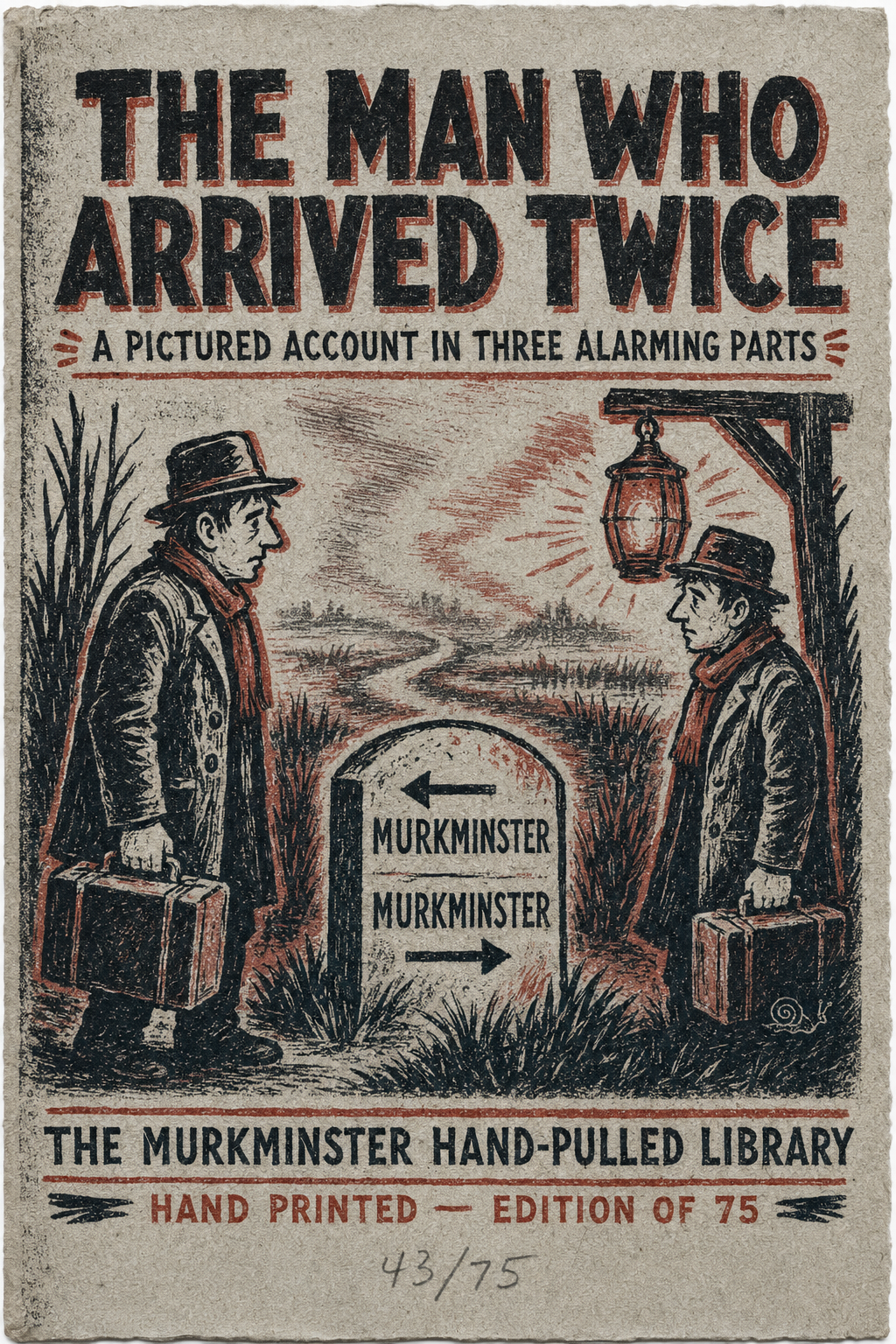
The trouble began at twilight, where the high road split around a weathered stone marker.
Both arrows pointed toward Murkminster. Naturally, they disagreed about how to get there.
Part I · The bootprint at the crossroads
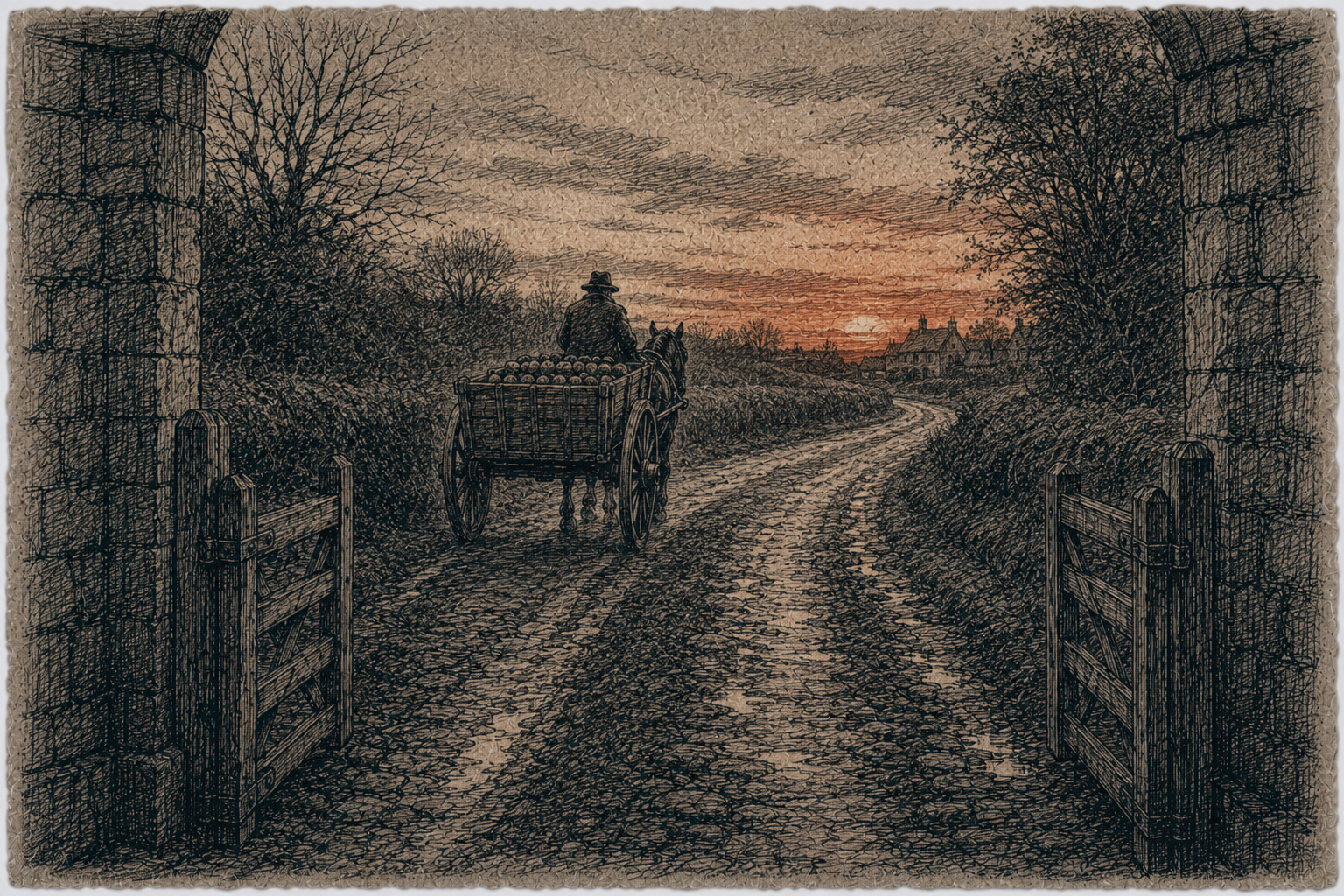
The trouble began at twilight, where the high road split around a weathered stone marker.
Both arrows pointed toward Murkminster. Naturally, they disagreed about how to get there.
Evidence · one impression
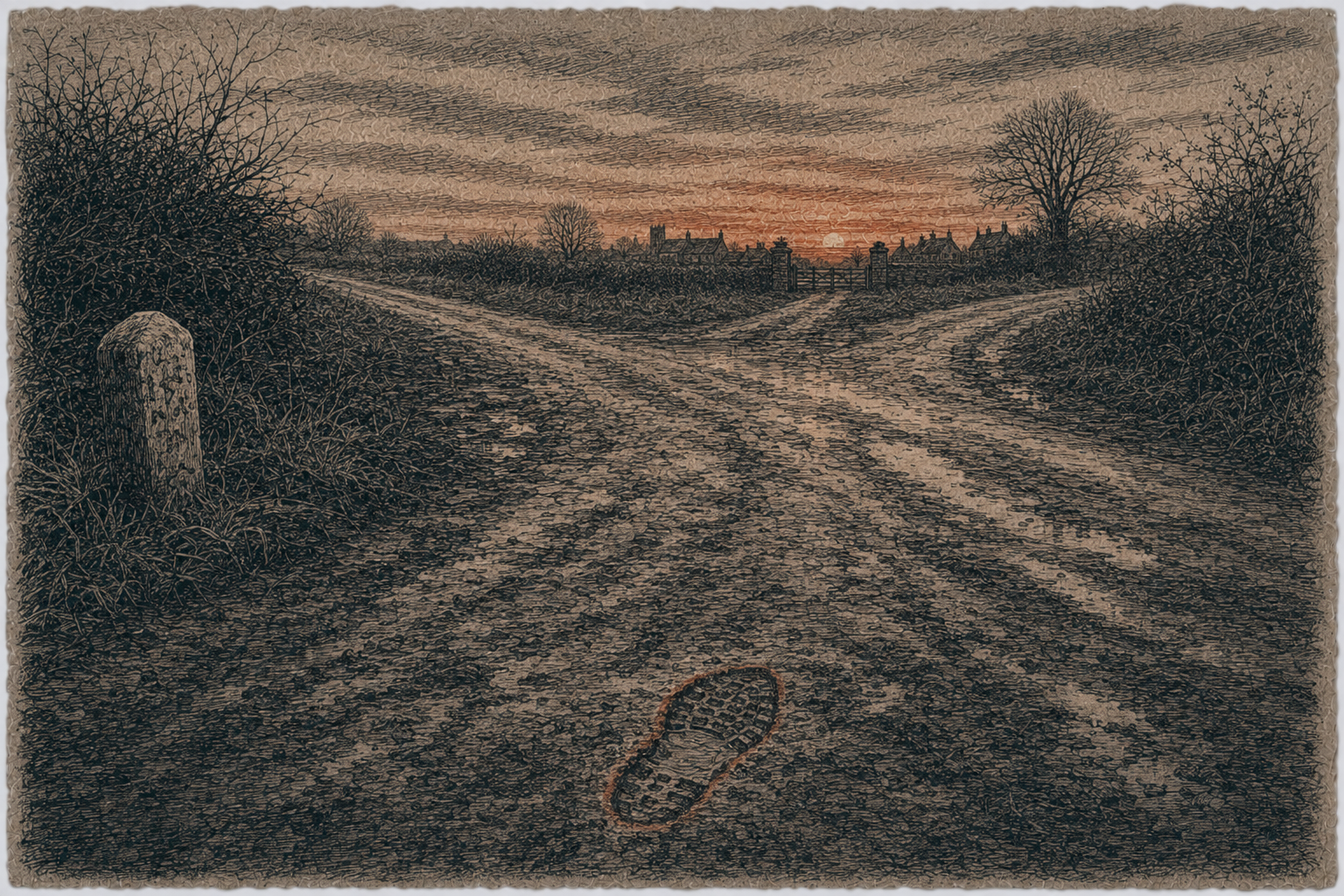
A single fresh bootprint pressed into the left-hand track, edged with faint reddish ochre clay.
It had no partner. Whoever made it had arrived on one foot, made a point of making an impression, and vanished toward the gate.
Part II · The tally in the toll-house
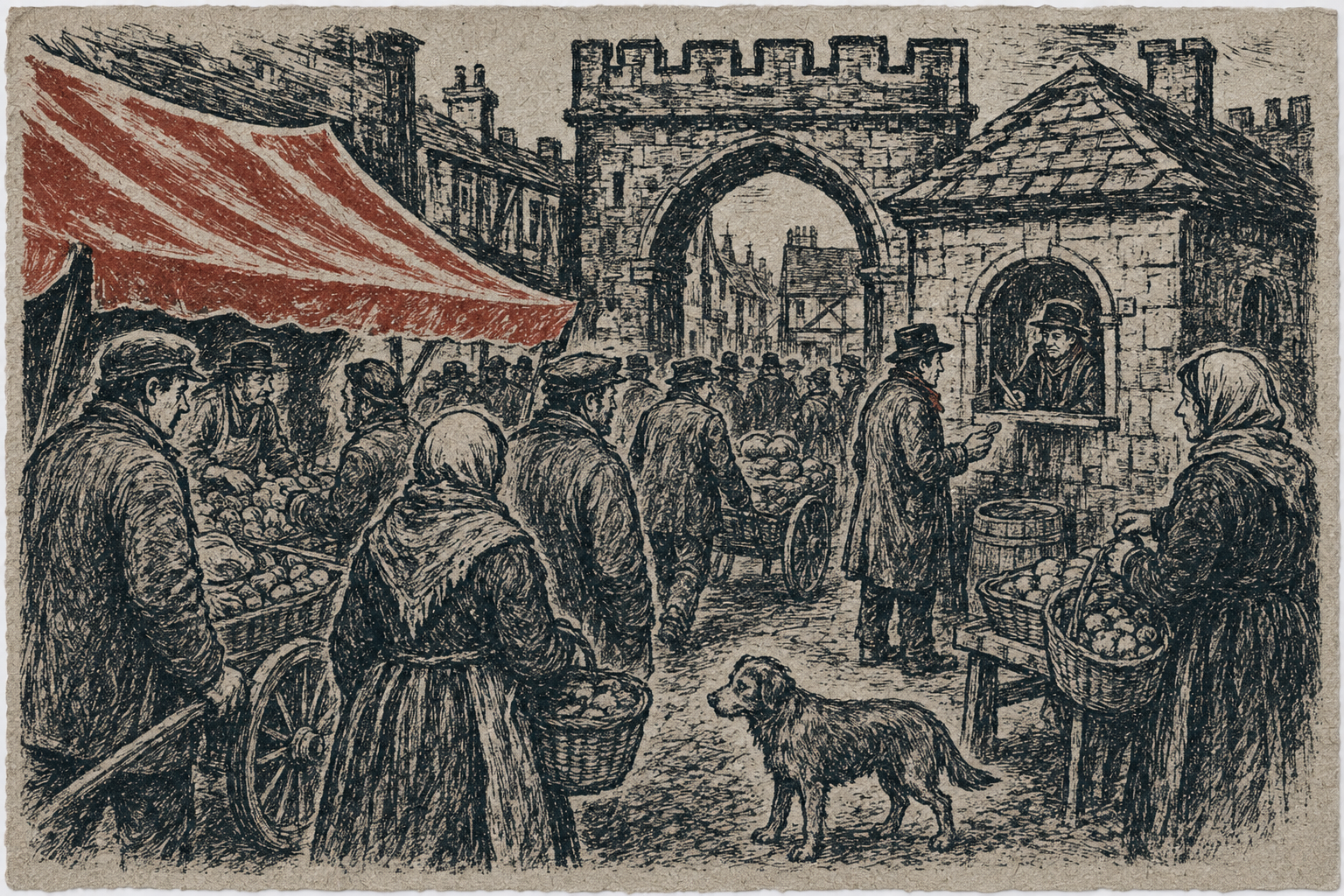
At the market gate, every arrival cost one penny and received one firm mark in the Great Toll Ledger.
The roads might wander. The arithmetic did not.
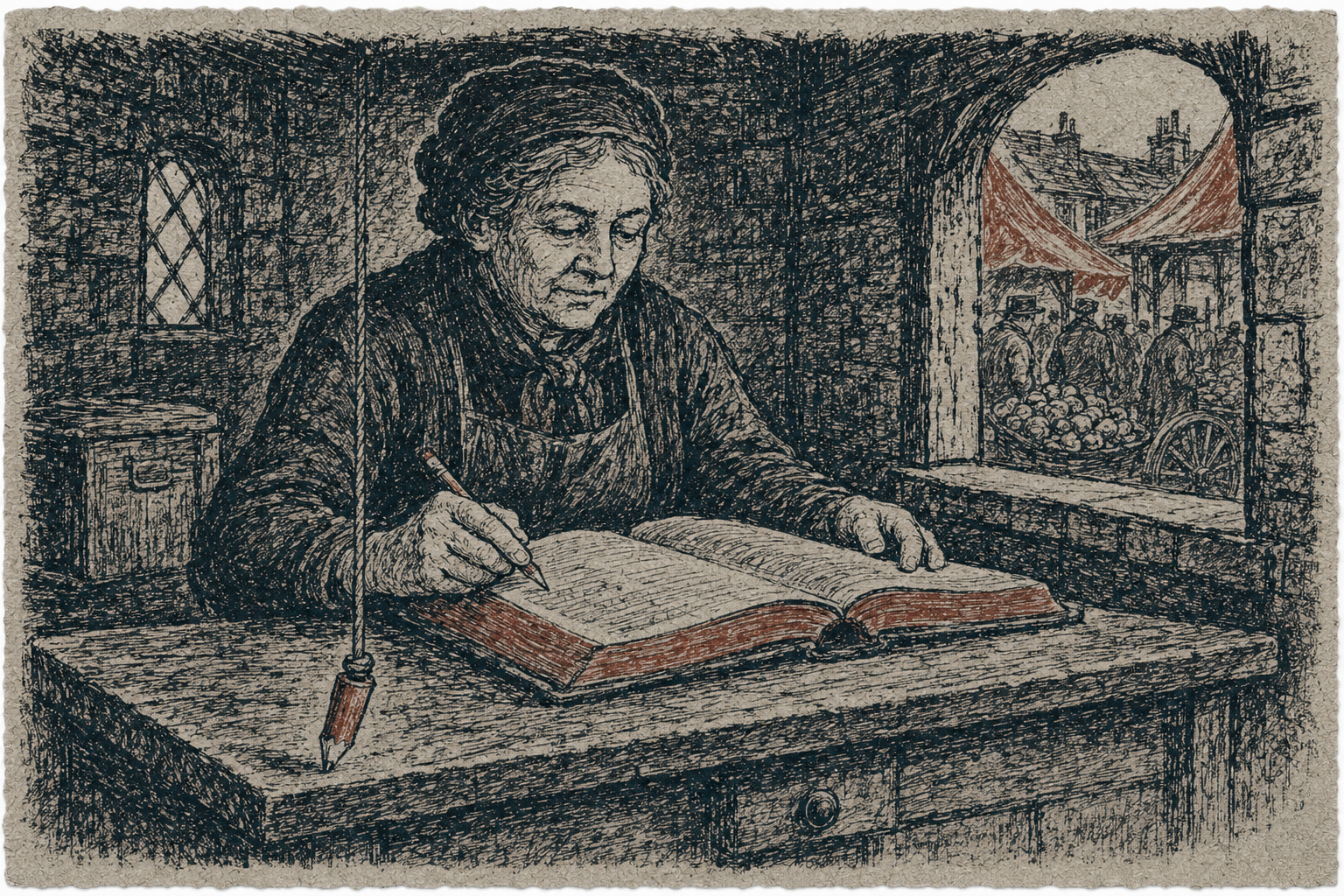
The registrar
Accurate copper payments and firm ink marks.
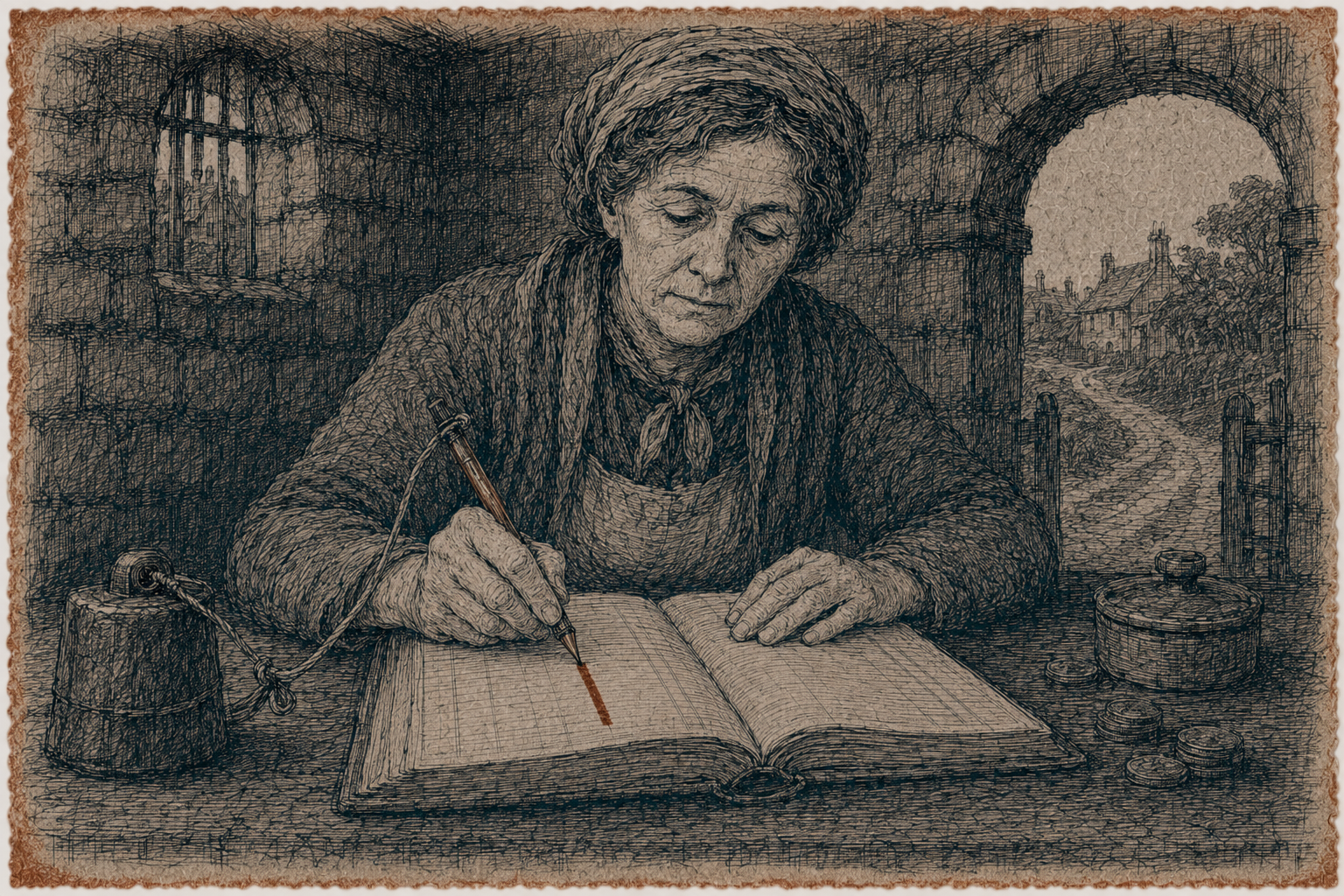
She was not a woman given to flights of fancy, particularly when there was a column available.
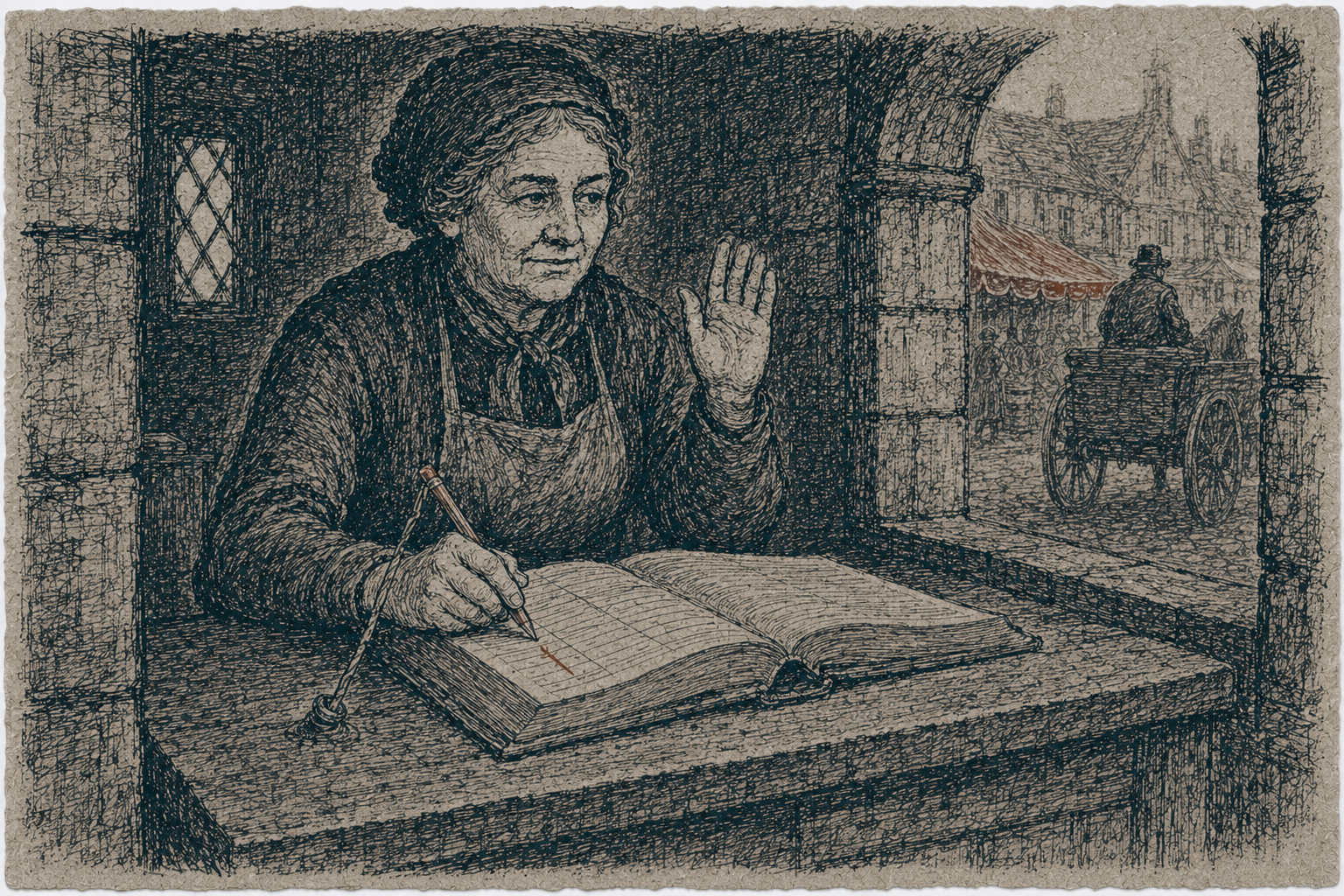
Four minutes past six
A traveller in a heavy coat paid at the window, nodded once, and passed into the market square.
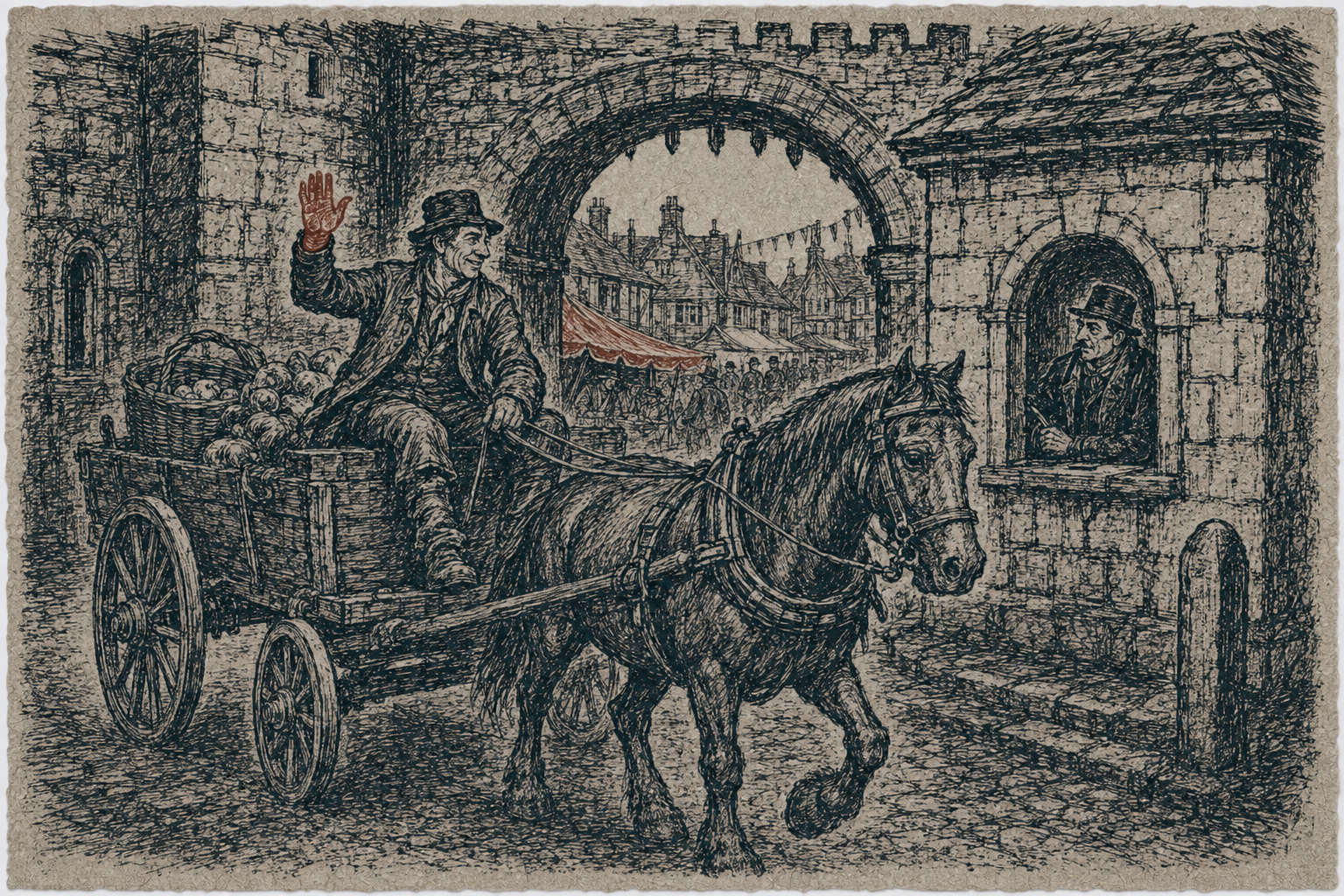
The first arrival
The coat was damp. The suitcase was brass-bound. The face was long and mournful.
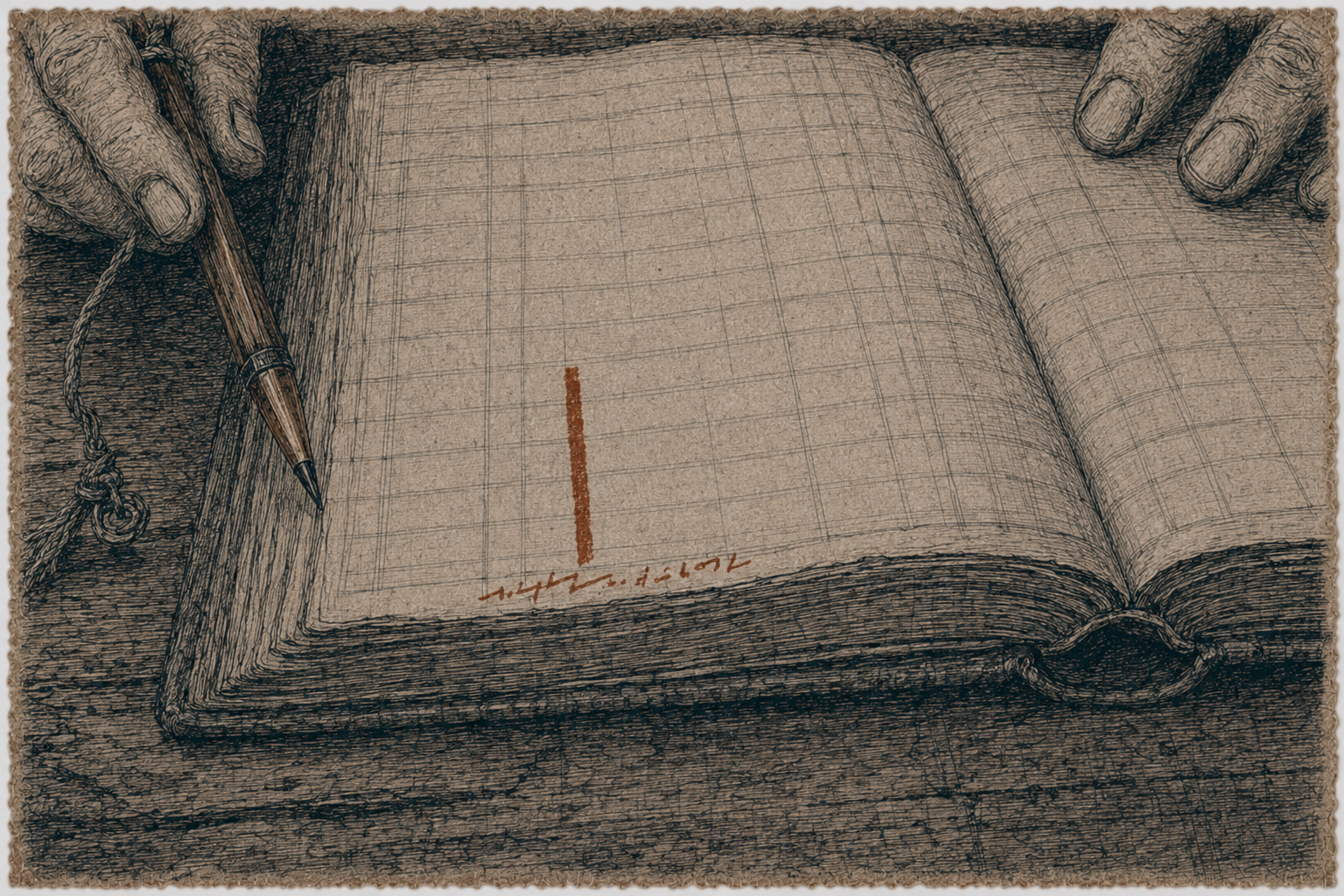
Alys dipped her pencil and struck one crisp ochre line down the column.
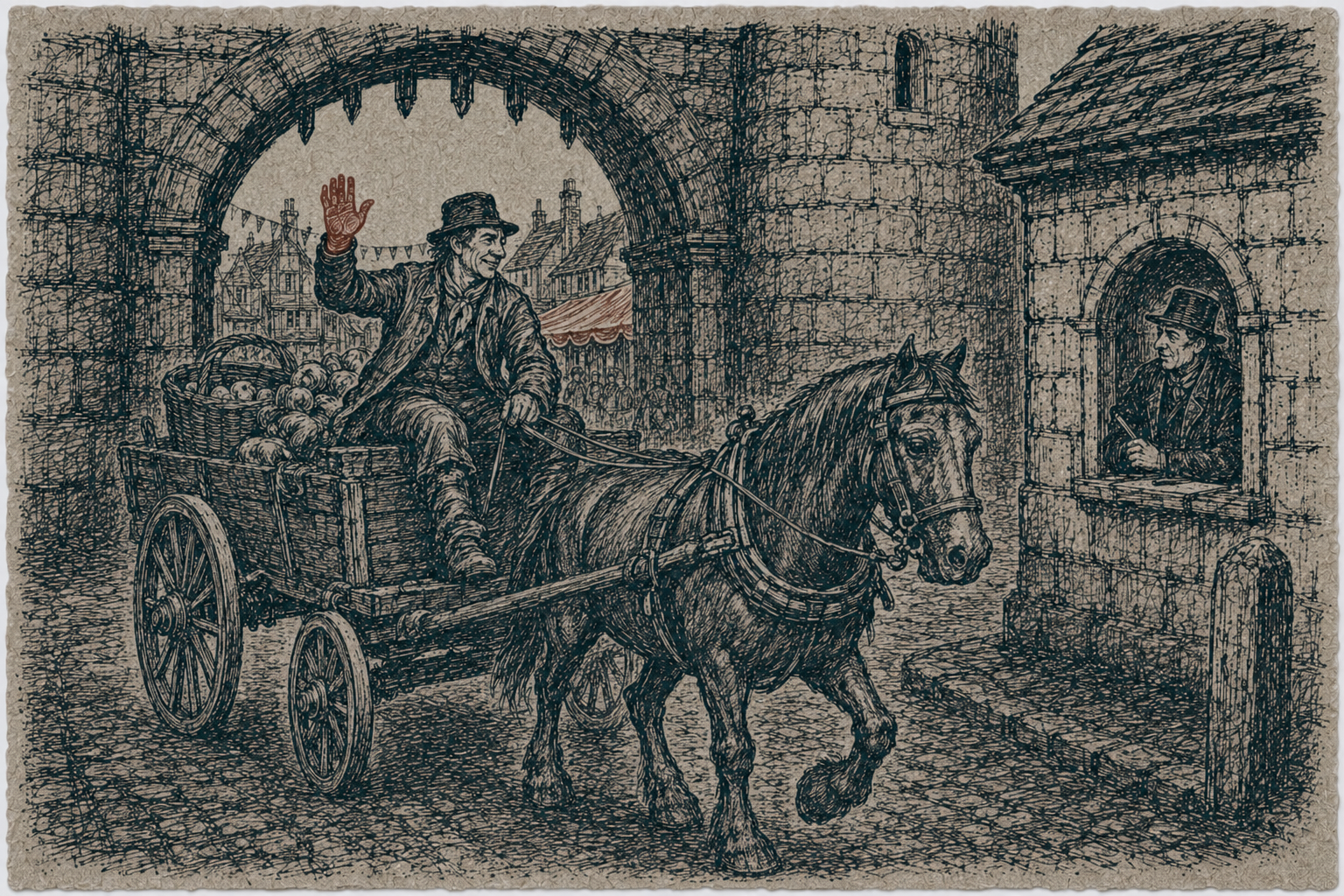
The second arrival
The same coat. The same suitcase. The same long nose.
Another penny crossed the sill. The traveller nodded and walked toward the square—as though he had not just done precisely that.
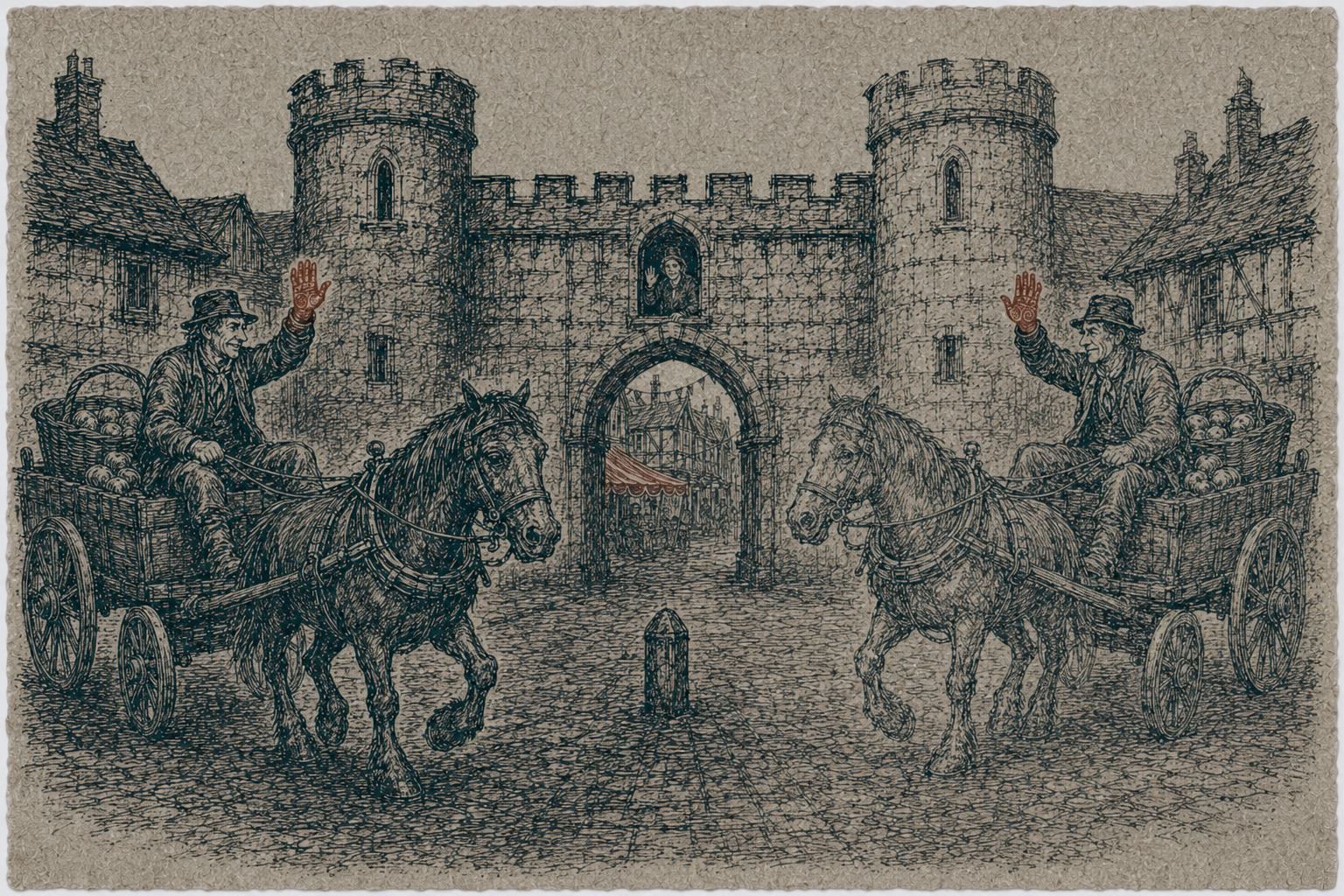
Contradictory observation
A less dedicated registrar might have panicked.
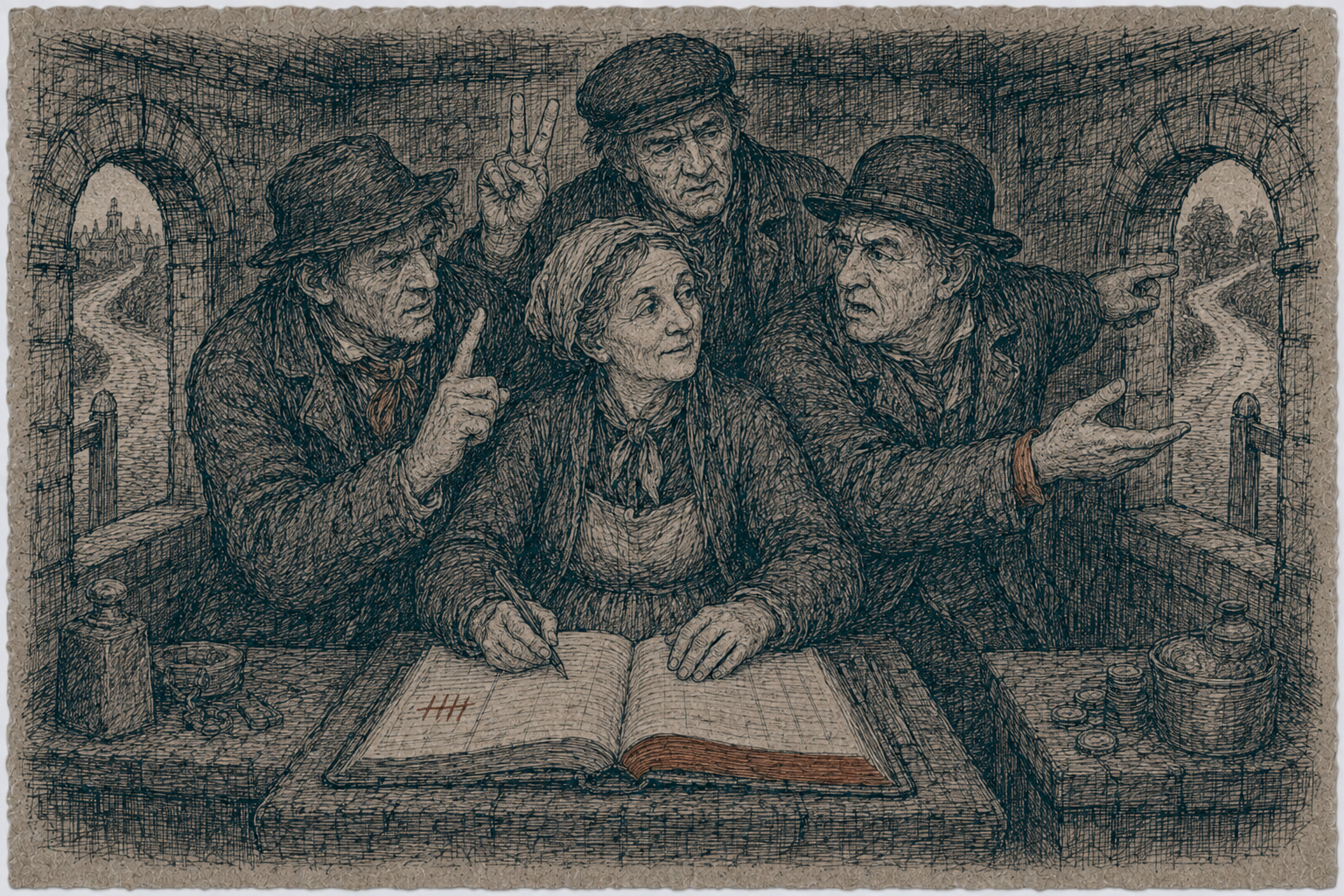
Alys looked at the men, the coins, and the road. Then she looked at the empty space where a second tally ought to go.
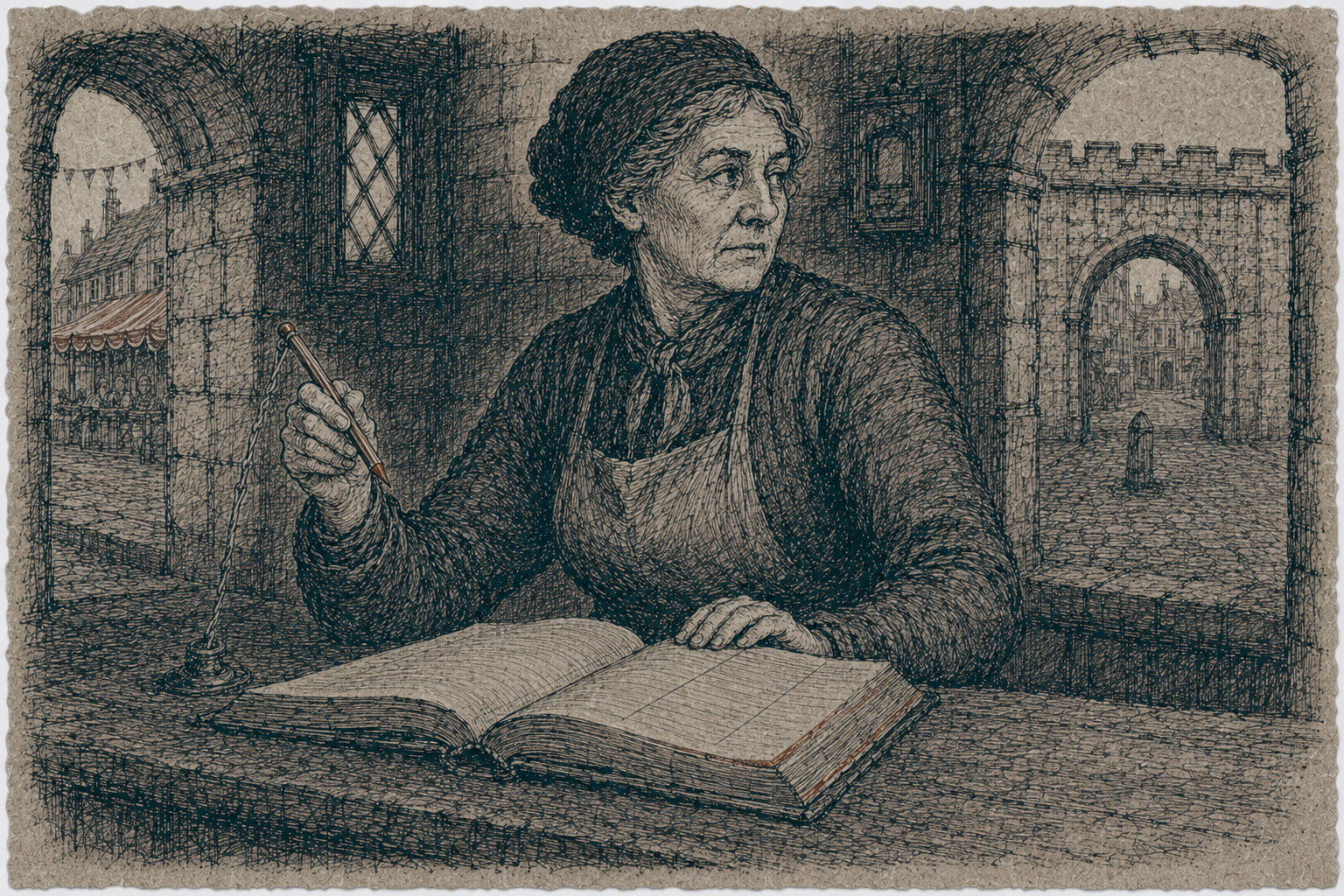
Method before alarm
Alys checked the time, the gate, the window, the mud and both directions of travel.
The evidence remained perfectly clear and entirely unhelpful.
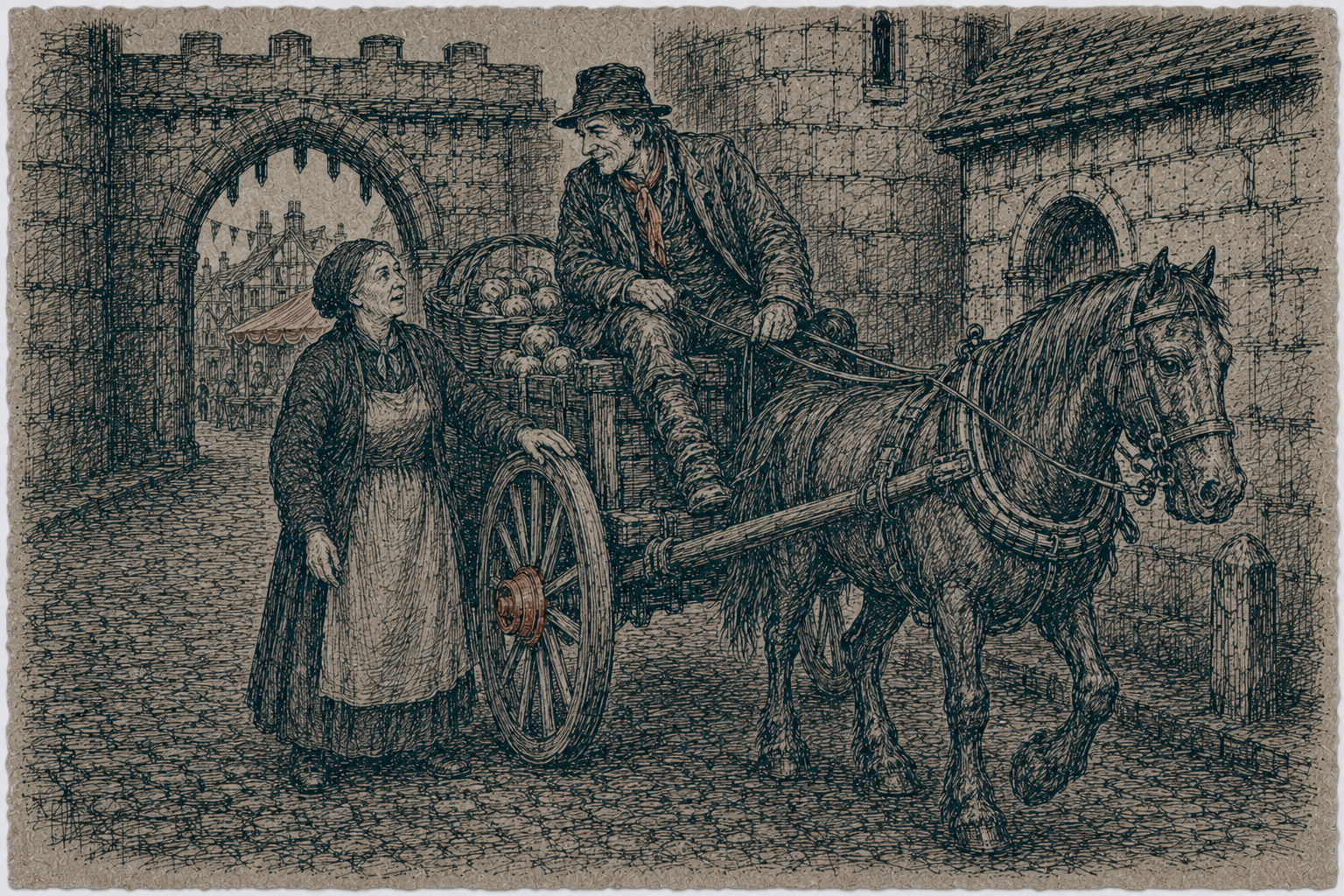
Witness requested
The traveller stopped. Or one of him did.
Alys asked the question every toll registrar eventually asks: which way had he come?
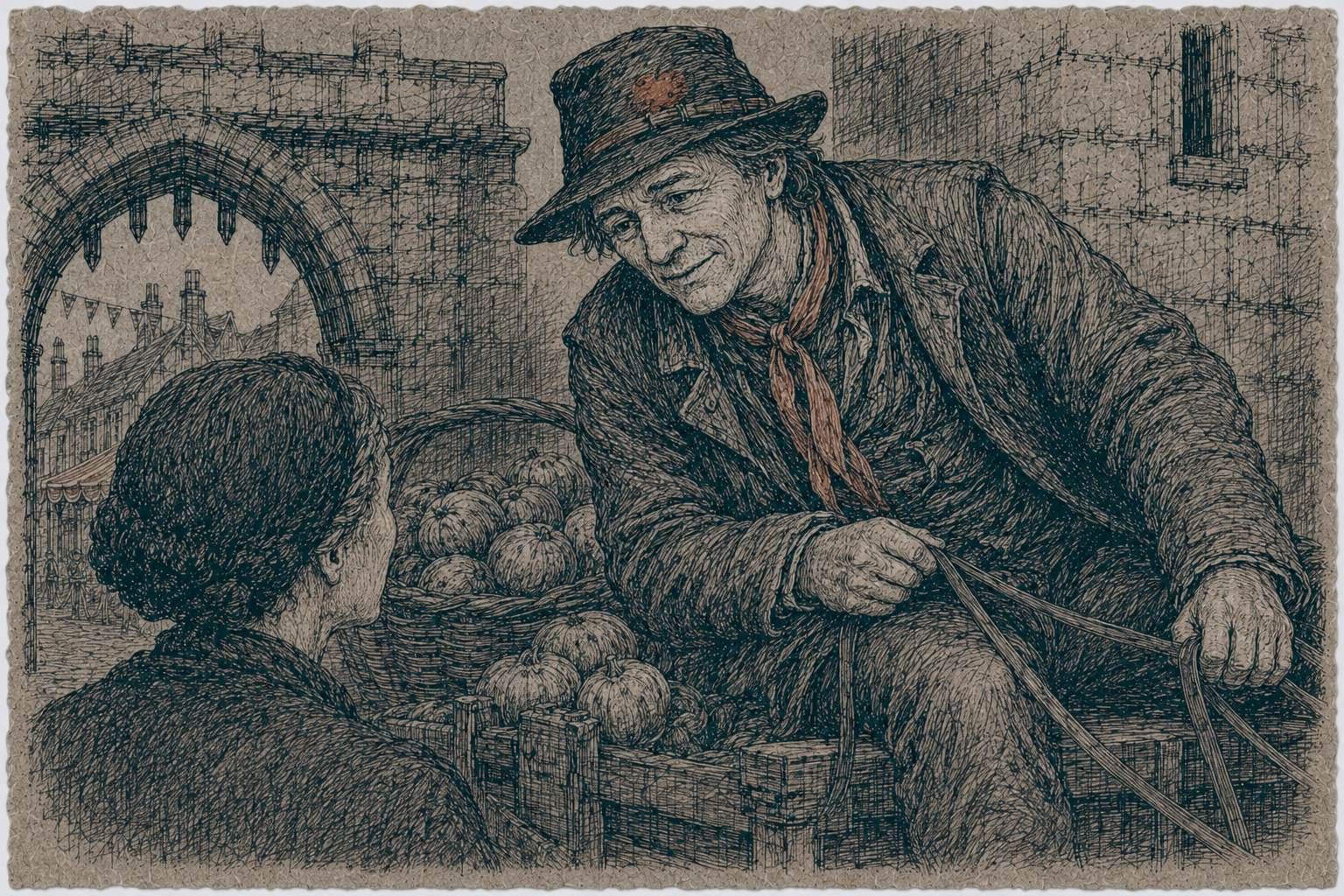
Witness statement
He pointed down the road, considered the road, and pointed the other way.
Both answers appeared defensible.
Part III · Contradictory witnesses
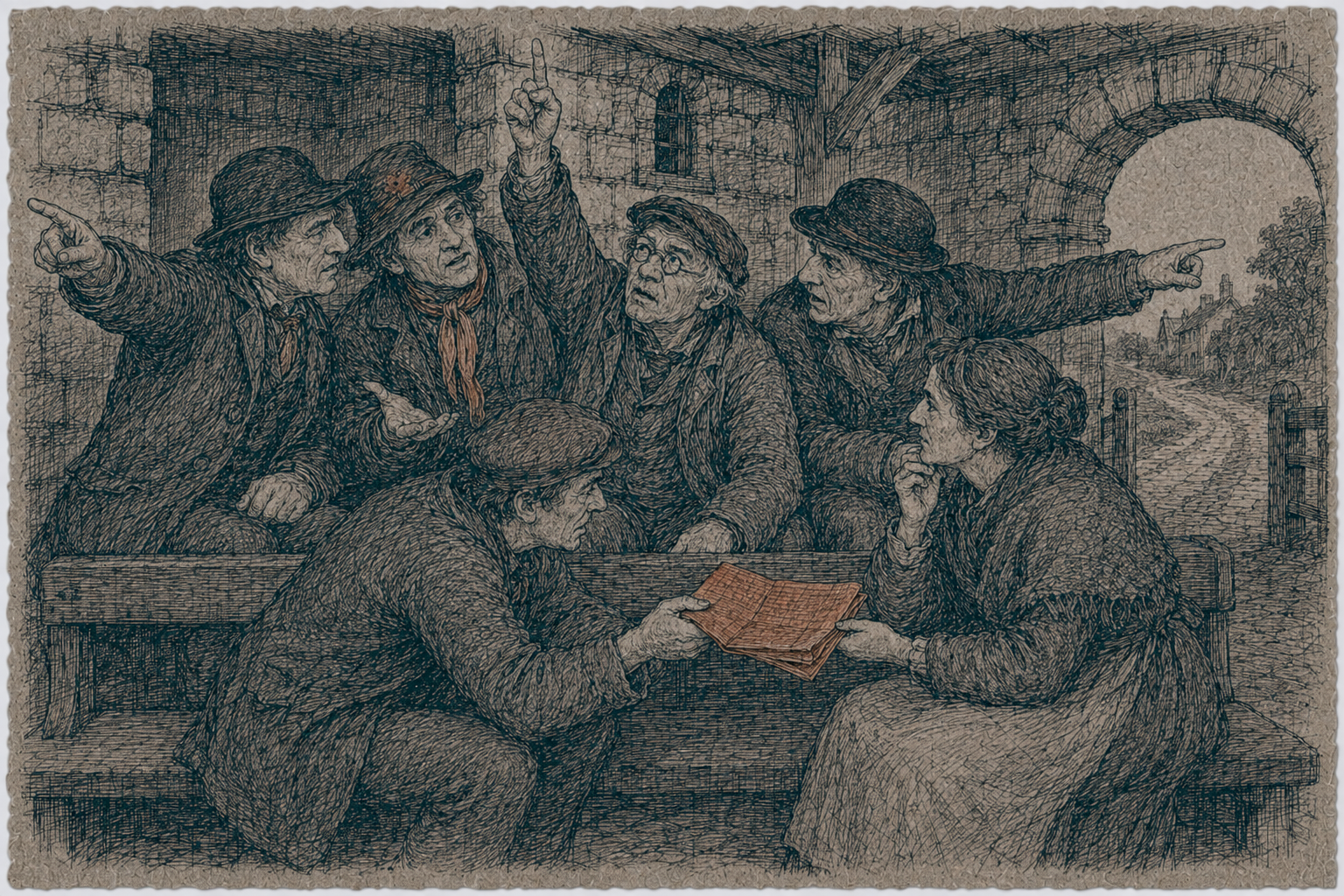
Word spread. By eight o’clock the back room was full of travellers, receipts, directions and firm declarations of originality.
Proceedings
One came by the north road. Another met himself at the milestone. A third had been behind the cart the entire way.
The roads accepted every accusation without comment.
Finding
Its roads were merely so bent and looping that a traveller walking straight for two miles was bound to pass himself coming back before supper.
Accounts adjusted
Alys held out her palm.
“The Committee does not care how many of you there are—only that the toll balances.”
Filed · conditionally resolved
The traveller—or travellers—paid.
The road carried on in both directions and, by local standards, behaved impeccably.