THE WASHING BOOK
Contents
At the Copper
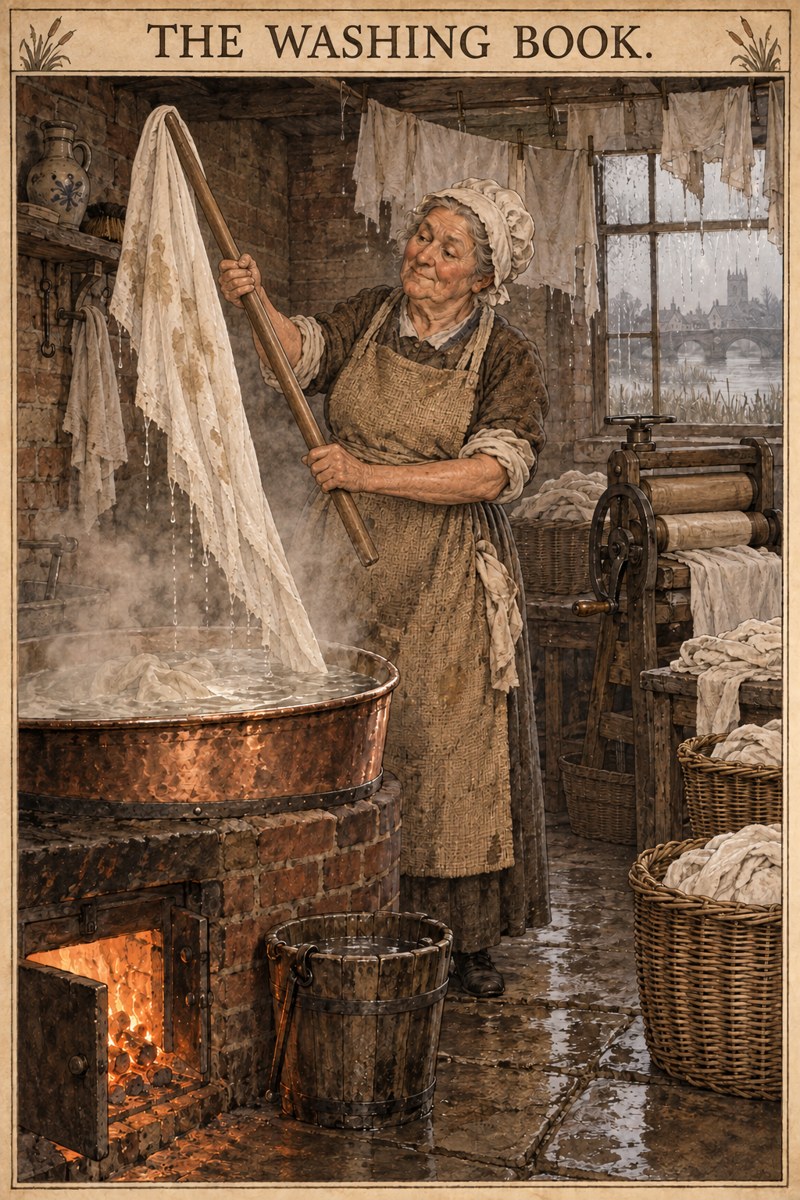
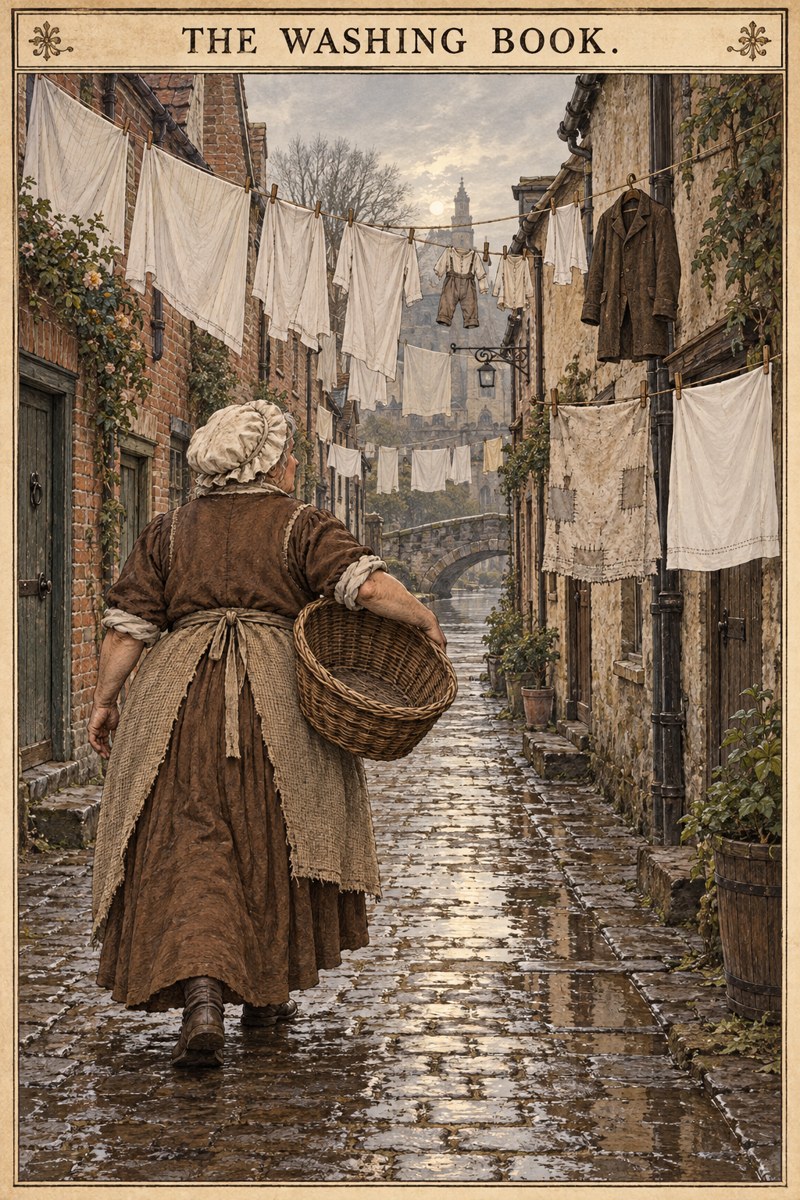
I take in washing. I have taken in washing since I was fourteen and my mother's hands went. Monday the sheets, Tuesday the shirts and the small things, Wednesday the heavy work, and the rest of the week getting it dry in a country where nothing dries, which is the whole art and nobody thanks you for it.
And I will tell you what I have learned at the copper, which the Chancery with all its clerks has never learned in its whole existence: there is nothing about a house you cannot read out of its basket. Not the front of the house. Not the face it wears at the market. The basket — what is in it, what is not in it, what has been scrubbed at before it came, and what somebody hoped I would not hold up to the light.
They come down the lane with their baskets and their good mornings and their weather, and they set them down, and while they are still telling me the weather I am already reading them. It is not cleverness. Anybody could do it who was willing to stand in steam for forty years and pay attention. Nobody is.
Each entry: The House · The Basket · What It Says — the last being mine, and never spoken aloud, whatever the lane thinks of me.

1The Shirts That Went Careful
The House. A young man of the wharf end, lodging alone, sends his wash fortnightly and never minds the state of it. The Basket. Then, of a sudden, weekly. And the collars turned. And a shirt in it that has been at with a brush before it ever got to me, and badly, the way a man does it who has never had to. What It Says. He is courting. (He is courting a girl at Sodden Bottom who does not know it yet, and will not know it for a month, and I have known it since the first turned collar. I said nothing. You do not say. But I put a little blue in that shirt, which is not charity, it is trade: a man who marries well sends washing for forty years.)
2The Sheets Changed Daily
The House. A family off the market square, respectable, three children, always paid on the day. The Basket. Sheets every day for eleven days. Boiled, and wanting boiling. No word said, and the eldest girl bringing them instead of the mother. What It Says. There is somebody ill in that house who is not to be spoken of. (It was the mother. They were keeping it from the town because the father had work that wanted him steady and a man is not kept steady by the parish being sorry for him. I washed eleven days of it and asked nothing and charged the ordinary rate, and when it turned, the girl brought the ordinary two sheets again and neither of us mentioned the eleven. That is the whole of my religion, if the curate wants it written down.)

3The Two Pillow-Slips
The House. Married nine years, well thought of, sit together in chapel. The Basket. Two pillow-slips, washed the same, worn different. One with the hair oil and the crease of a head. One barely used, and cold-smelling, and folded by somebody being careful about it. What It Says. They are sleeping apart, and have been since the Frost. (Nobody in that lane knows. They will tell you those two are the happiest pair in Drudgeford, and they may yet be again — a bed is a habit and habits come back — but I had it out of a pillow-slip a twelvemonth before the chapel had an inkling, and the chapel will get it last, as it gets everything.)
4The Widow's Shirts
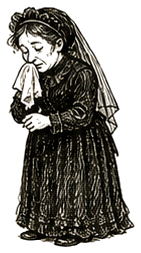
The House. A widow at the crossing, alone these four years. The Basket. Her own things, and every quarter, his: three shirts, a good coat, a collar. Worn by nobody. Wanting nothing. Washed, and pressed, and taken home again. What It Says. She is not ready, and may never be, and it is nobody's business. (I wash them. I charge her for the soap and not the work, and I have never once said they are clean, Nan* in a tone that means he is dead. There are laundresses who would. There are laundresses who would tell the lane. The lane can hear it from somebody else.)*
5The Coat and No Shirts
The House. A clerk of the counting-house, newly risen, very fine on the step. The Basket. One good coat, always the coat, beautifully kept. And one shirt, the same shirt, week on week, mended at the cuff in a hand that is getting better with practice. What It Says. The rise came with the coat and not the wage. (He has the one shirt and he is washing between wears himself, badly, and sending me the coat so that the lane sees a coat come down to Hester Wringe on a Tuesday. It is the most expensive sixpence in Drudgeford and I take it with a straight face, because a man who is drowning quietly has a right to do it in a clean coat.)
6The Monday After the Fair
The House. All of them. Every house on my round, the Monday after the autumn fair. The Basket. Forty-two sheets to the copper before noon, and every one wanting boiling, and the water black by the second batch. What It Says. The fair was a good one. (That is all it says. Not everything in a basket is a secret. Some of it is only a town that has enjoyed itself and left me to deal with it.)
7The House That Sends Nothing
The House. A cottage at the lane's end that sent washing every week for years, and then did not. The Basket. None. No basket. Four months of no basket. What It Says. They cannot pay, and are too proud to say so, and are wearing the same things grey. (I went up with an empty basket of my own and asked, as a favour, whether they would take in some of my overflow at a fair price, being that I was run off my feet — which I was not — and they were glad to oblige me, and we have kept that arrangement three years now. There is not a soul in Drudgeford who knows, and if the Chancery wants to call that a fiddle, the Chancery is welcome to come and stand in my steam.)
The Last Entry — Being the One Basket I Never Read
There is a basket in my own house, by the door, and I have not looked in it properly in thirty years.
My boy Tom went to Murkminster when he was seventeen. He writes, and he comes at the turn of the year, and he is well, and that is what I tell the lane, and it is true. And every visit he brings his washing home in a bundle, which pleased me for a long while — a mother likes to be wanted for something — and I did it Monday with the rest and never once did what I have done to every other basket in this town.
I looked in it this spring. I do not know why; the copper was slow and my hands were still.
There is a collar in there turned the way I turn them. There is a cuff mended in my own stitch, which I never taught him, and which he has taught himself off my mending, badly, the way a man does it who has never had to. There is a shirt that has been at with a brush before it got to me.
He has been doing his own washing in Murkminster all this while, and bringing me the last of it to do, so his mother should have a thing to be wanted for. He has been careful about it for thirty years, and I have not noticed, because I do not read my own basket, because there is nothing in it I do not already —
Well. Read every house on the lane, Hester, and never once the one you live in.
I shall not put this right. He would be mortified, and so should I, and the pair of us would have to say things out loud that neither of us has the constitution for. Monday I shall do his shirts as I always do, and say nothing, and he will say nothing, and we shall go on being wanted by each other in the only way we can manage.
Which, now I set it down, is what every basket in this book has been about, and I have been forty years telling myself it was cleverness.
