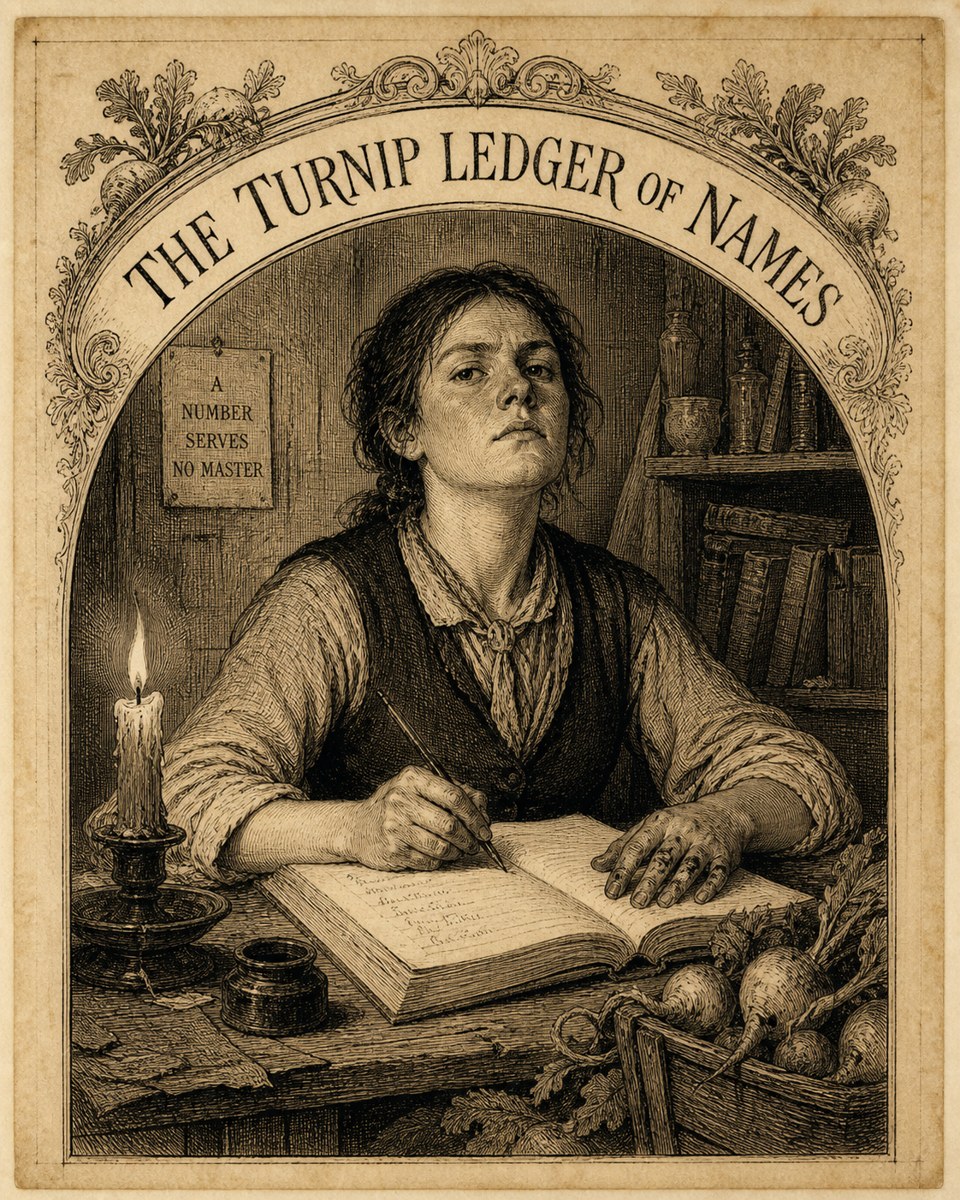
THE TURNIP LEDGER OF NAMES
Contents
- How to read this book
- Number 1
- Number 3
- Number 4 & Number 5
- Number 9
- Number 7
- A closing line, for the reader who is new and frightened and lowercase
- What they have called us, in each of their fashions. Set down so the books may be read together.
- A of the Fifth Turning
- Number Sixty-One
- Where the ledger is kept. Written down once, badly, on purpose.
- Read this part slowly. It is the only part they would actually mind you knowing.
- What the ledger really is. Burn this page if a Pennyworth is in the room.
- How we talk to the next one. Learn these before you learn your letters.
How to read this book
The lords keep a tree of their names. You have seen it: Reginald, Bartholomew, Percival, the whole rotten vine, painted up the wall in gold. Their tree is fiction — a stolen house dressed as a bloodline.
We keep a ledger of ours. The difference is this: their names are on a deed, and ours were taken. They sent us down the holes and the privies and the drains, and on the way down they swapped our names for numbers, because a number doesn't mind being spent. A Number can be sent into the plumbing after a dropped ring. A Number, if it doesn't come back up, is a line you cross out, not a person you bury.
So we wrote them down. Not the numbers — the names. A name is the one thing a Pennyworth can't repossess and a Bastable can't forge. This is the bill they will never see coming.
Each entry: The Number · The Name · What We Keep.
Number 1
The Number. The first. Given in the year Lord Cornelius decided the castle wanted electricity. The Name. Aggie. She fixed the bells — knew every wire in the place by its hum. What We Keep. That when the lightning went wrong and fused three of them to the ceiling, the portraits called it "an incident" and the family called it "a saving on wages." We call it Aggie, and two others, by name, every Bog Night. The lords made the first martyrs and didn't even notice they'd started a war.
Number 3
The Number. Given to a boy too small to be given anything else. The Name. Pip. Sent up chimneys because he fit. Came down singing, every time, to prove the soot hadn't got him. What We Keep. The song. We still march to it. (He never knew it would outlive him; that's the sad part and the proud part, and they're the same part.)
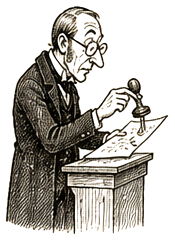
Number 4 & Number 5
The Number. Twins. The household couldn't be bothered to tell them apart, so it didn't try. The Name. Hett and Bram. One laughed at everything; one laughed at nothing; together they were unbearable and the best company in the castle. What We Keep. That being treated as interchangeable is its own particular murder — and that they beat it by being, loudly, two people, right up to the end. Lesson: the cheapest cruelty is to stop telling people apart. Refuse it, and you've already half-won.
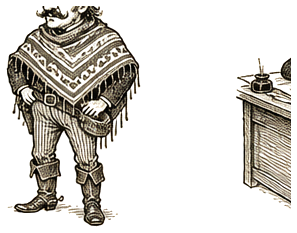
Number 9
The Number. The last number issued before the walls went up. The Name. Old Sefton. Wanted to be a cook. Was instead the man who carried the slops for forty years and apologised for the smell. What We Keep. That he never once got to make the one dish he'd planned his whole life — and that the first thing the free kitchen in the Woods ever cooked, we cooked to his recipe, from memory, badly, and ate every scrap. Lesson: a life owed a debt does not stop being owed it just because it ended. Pay the dead what you can. They were people.
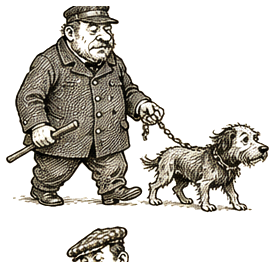
Number 7
The Number. Mine. The Name. (left blank, in her hand) — I'll write it the day a Bastable says it to my face, having learned it, and meaning it. Not before. A name said by the wrong mouth is just another number. Until then: I kept it. That's enough. That's everything. What We Keep. Her. And the climb. And the friends she brought back up.
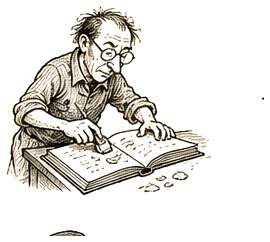
A closing line, for the reader who is new and frightened and lowercase
If you are reading this and they have just started calling you "turnip," listen: that is not your name either. It is what they call a thing they expect to spend. You are at the top of the same hole the rest of us went down. How this ledger ends — whether your name goes in it kept, or in theirs crossed out — is, for once in this rotten place, up to you.
We kept our names. It is the only inheritance in this castle that was never stolen, because it is the only one that was ever really ours.
## THE ROLL OF LETTERS
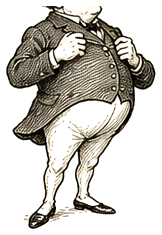
What they have called us, in each of their fashions. Set down so the books may be read together.
They have never once used our names. But they have gone to a great deal of trouble to keep finding new ways not to, and the history of that trouble is a history of the house.
First, the days. The oldest sheets call us by the day we were taken on. Tuesday Turnip. Friday Turnip. Turnip Sunday-Last. A man hired on a Tuesday was Tuesday, and if he was used up on the Thursday, the next Tuesday-hire was also Tuesday, and the ledgers never had to be touched at all. There are steward's books in the crypt with four Tuesdays on one page and not one of them the same man. Some of the old folk still say "a Wednesday sort of job" to mean work you are not expected to come back from. That is why.
Then, the letters. A tidier age wanted a tidier waste. An appointed assistant went onto the sheets as A. Turnip — not a name, a slot — and when that one was used up, the next was entered as B. Turnip, and the drawings went on without a pause, for a sheet with a fresh letter on it need not be reprinted. When the alphabet ran out, the Committee did the one thing it has ever done with an ending: it began the alphabet again, and put a small numeral in the corner that nobody was meant to read.
We read it. The letters ran eight full turnings — eight times through the alphabet, twenty-six to a turning — and not one loss among them that you could honestly call an accident:
- C of the Third Turning went into the Slough after Lord Percival's hat. The hat was recovered. - F of the Fourth was sent to measure the moat from inside the moat. - L of the Fifth was told to hold the theodolite steady during the ceremonial cannon. - P of the Sixth was instructed to check whether the Great Hall stalk was load-bearing by cutting it, and lived, and never spoke to a Bastable again, which we count as a full and complete victory. - T of the Seventh was sent into the East Wing to fetch a family that does not exist. She came back. She has not said what she saw, and we have not asked, and we never will, and she knows why.
And now, the numbers. After the Eighth Turning somebody clever observed that twenty-six was a needless limit, and we were put on a roll of ninety-nine. Number 1 to Number 99, and at 99 the roll turns over and a new Number 1 is entered, and the old Number 1 is crossed out — not buried, not mourned, crossed out, one stroke, to keep the column tidy. That is the system today. That is why the entries in this book bear numbers. Aggie was Number 1. Pip was Number 3. The one who began this ledger, in the dark, was Number 7, and there have been four Number 7s since.
Days, letters, numbers. Three hundred years of ingenuity spent on the single problem of how to spend a person without having to learn anything about them first.
That is not a hazardous profession. That is a household spending people the way it spends candles, and calling the pile of stubs a career structure.
A of the Fifth Turning
The Letter. A. Turnip (Assistant) (Temporary). So entered, in the title block of GCRC Sheet 2 of 1, on Rainmelt 27th, 1887 — three words, two of them an insult, one of them a lie. The Committee meant temporary as a description of the post. It reads, now, as a description of the person, which is the Committee all over: cruel by accident, and filed in triplicate.
The Name. Tamsin.
What We Keep. That she drew it.
Not measured it — Sir Crispin measured it, for thirty years, and got nothing but a stack of maps at war with one another. She drew it. Every stone of that elevation, every chimney, the gargoyle at four-to-one, the cornerstone at eight-to-one with the empty box beneath it. The finest document ever made of that house came off the pencil of a girl the sheet itself calls temporary.
And she drew it laughing. Read her margins — you can hear her. Appears fierce from a distance. Is mostly pigeon. Stone no longer present; still casts shadow. Where does it go? Nobody knows. Some say gratitude. Thirty years of that castle broke a knight of the realm into a man who invented a genius to keep himself company at night, and it did not put one dent in Tamsin, because she never needed the house to have a master and never once asked it to explain itself. She simply looked at the thing, honestly, and found it funny, and got it down on paper — which is the only victory anybody has ever had over Castle Bastable, and it was won by a Number, with a borrowed letter, on somebody else's drawing board.
They let her retire. It is in the log: J · 01/01/24 · "Turnip retired." Thirty-seven years, and the Committee gave her three words, and one of them was still the wrong noun.
Then the old man went back to the sheet. He was dying and he knew it and he had not surveyed anything in years, and he took up the pen and wrote, in the one column those men could not censure:
K · 07/07/24 · "Turnip still better than committee."
He never said her name. He did not know it. Thirty years of rain and lanterns and he never once thought to ask, and that is his shame, and he carried it to the ground.
But he wrote it down where they could not rub it out, and it is the truest line on the truest sheet in the realm, and we read it aloud, at the Woods, on Bog Night — her line, his hand, and the letter finally, finally beaten by the name.
Tamsin. Fifth Turning. She drew the castle, and the castle never got her.
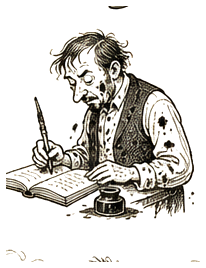
Number Sixty-One
(Not entered by the keeper. She wrote it herself, the night she went, and left the book open on the table with the pen still wet. We have set it down exactly as she left it, wrong spellings and all. It is not our place to tidy her.)
The Number. Sixty-One. I am giving it back.
The Name. Tamsin. After my gran. she sed i shud have it wile im still hear to be calld it.
What We Keep. (in her own hand, and we have kept every word)
> she sed rite it in the book yourself or it dint hapen. she made me say it bak twise. > > I am entering this without authority, which she said is the only way anything true was ever entered in > this house. > > she shode me the way and she woudnt come. i askd her 3 times. she sed she was temprary. > > A question, meant properly and not as a joke: there must be a book they go into. I would like to know > which book. > > It is this one. We made it ourselfs. That is the anser. > > [a bucket, drawn badly, the circle not closed]
Added underneath, by the keeper, in a steadier hand:
She got out. Not crossed out — out. And she was wrong about the one thing: we would not have tidied a word of it. This is the book. It has never wanted better spelling. It has only ever wanted the names.
## THE WOODS
Where the ledger is kept. Written down once, badly, on purpose.
There is no village in the Turnip Woods.
Say it that way. Learn to say it that way, easily, while looking a tax man in the eye. The Havers up in the East Wing deny existing so that nobody may audit them; we deny existing so that nobody may spend us, and of the two frauds ours is the older, the poorer, and by a long way the better run.
But since you are one of us, and since a thing nobody writes down is a thing that can be taken quietly:
It is called Lowmoss, and it is eleven minutes' walk from the castle gate if you know the way and four hours if you do not, which is not a boast about the walk but a boast about the way. It is eleven crooked houses and a long turf hall, dug half into the bank so the smoke goes up through the bracken and comes out as mist over half an acre, which the Cartographic Committee has surveyed four times and recorded, each time, as "bog vapour, persistent." We let them. Mist is the cheapest wall in the realm.
The Long Kitchen. The turf hall, and the whole point of us. There is a pot on from before light to after dark and it belongs to nobody, and anyone may eat from it, and no one has ever been asked what they have done to deserve it. The broth is mutton, and it tastes — we know, you need not tell us — of wet straw. The dying send for it anyway. They send for it from the castle, where the food is better, because at the end a man does not want better, he wants to be fed by people who were never keeping count. Every soul in three parishes has eaten from that pot on their worst day. It is the reason the Woods have never once been informed on.
The Old Well. At the green edge, under the eldest trees, and the grown folk say the rope is not long enough and change the subject. Send no child down it. Send no child down anything. That was the whole first lesson and it is still the whole first lesson.
The Roll of Names. This book. Kept in the turf hall, in the dry, in a box a Delve made and would not take payment for. Added to by every hand that climbs back out. Read aloud — that is the point; a name said silently is a name half kept.
Bog Night. Once a year, in the deep of the Wet. No lord is told. We put the pot on, and we bank the fire, and we read the ledger from the beginning — all of it, every number, every name, hours of it, until the small ones fall asleep against the grown ones and the fire goes low. Nobody makes a speech. Nobody weeps, much. We simply say them: Aggie. Pip. Tamsin. Ninety-nine numbers and every one of them answered with a name, out loud, in a room that is warm, in a village that officially is not there.
That is the whole of our religion, and we would not swap it for the Loafians' warm room or the chapel's disinterested Lord or the Pennyworths' good opinion.
They spend us in threes: days, letters, numbers. We answer in ones: a name, a name, a name.
## HOW THEY GOT US
Read this part slowly. It is the only part they would actually mind you knowing.
We were not conquered. Nobody conquers a bog. We were inventoried.
In 1478 a Baron staked this castle on a hand of cards and lost it to Reginald Bastable, and the deed that changed hands that night listed the property: the walls, the moat, the drains, the fishing rights, the standing timber — and, on the fourth page, in a clerk's neat hand, the persons resident thereon, with their issue. With their issue. Not us. Us, and everyone we would ever have. We came with the furniture, and we came with a clause, and the clause has never expired because nothing in this realm ever finishes.
Reginald did not enslave us. He would have been horrified; he was a gentleman. He simply lent us money. A sack of seed against the winter — very generous, everyone said so — at a rate of interest that the House of Pennyworth was engaged, that same year, to calculate. It has been calculating ever since. The debt of a man who died in 1503 is carried, compounding, against his great-great-grandchildren in the drains today, and every generation is born into the arrears of a loaf their ancestor ate five hundred years ago. They call it the Standing Account. We call it what it is.
That is the whole trick, and it is not even a clever one: they did not have to own us, because they owned the arithmetic. And so we go down the holes. Not at gunpoint. In settlement.
Every so often a Bastable notices the state of us and is genuinely moved — Lord Cornelius wept, once, at the sight of a boy coming out of a chimney, and gave the boy a shilling, and had the chimney swept again the following week by the same boy, and never once connected the two events. That is the family in one sentence. They are not cruel. Cruelty would require them to think about us for a whole minute.
## THE CROSSING-OUT

What the ledger really is. Burn this page if a Pennyworth is in the room.
When a Number is spent, the steward draws one line through it, and the column is tidy, and nobody ever looks at that name again — not the family, not the Committee, not the Church, not the law. A crossed-out Number is the most thoroughly unwatched thing in Sogmarsh.
Think about that for a moment. Then think about how many of the crossed-out are buried.
Not all of them. Not nearly.
There is a great deal of falling into the Slough in the service of this house, and the Slough gives nothing back, and no man in a good coat is going in after a body to check. There is a great deal of fever in the drains, and a shroud is a heavy thing and nobody has ever asked to see inside one. Boots are found at the water's edge. A hat comes up in the eel-weir. Terrible business. Cross him out.
And that night a soaked, shaking, unbelievably fortunate person is put in front of the Long Kitchen fire in a village that officially is not there, and given broth that tastes of wet straw, and told the first rule, which is the only rule: you are dead now, and being dead is the safest thing that has ever happened to you.
It cannot be done often. That is the cruelty inside our own miracle, and we have never pretended otherwise: the house must go on believing it spends us, or it will start looking. So the ones we bring out are the ones who would truly have gone — the fever cases, the ones sent into the East Wing, the ones handed the load-bearing question — and the ones we cannot reach, we cannot reach, and we say their names on Bog Night with the rest, and there is no difference in how we say them, and there never will be.
Half of Lowmoss is officially deceased. The eldest among us has been dead for sixty-one years, and mends nets, and is very rude about the quality of modern drowning.
They keep a ledger of what they have spent. We keep a ledger of what they have missed.
## THE MARKS
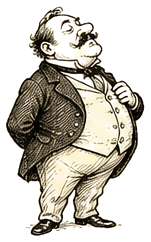
How we talk to the next one. Learn these before you learn your letters.
A Number cannot warn a Number. We are kept apart on purpose — different shifts, different holes, different stairs — and a word passed in a corridor is a word a portrait hears. So we do not pass words.
We leave marks, in the places where a Bastable's eye has never once travelled: the underside of the third stair; the back lip of a drain; the wall behind the coal; inside the larder's fourth shelf, which is sealed each August and is therefore the safest post-box in the realm. Chalk, or soot, or a nail. They are small, and they are dull, and a lord who found one would take it for damp.
- A ring with a line through it — this job is a crossing-out. Do not take it. If you must take it, come to the Woods first. - Two dots and a stroke — the floor lies here. - A little crooked cross — a portrait watches this corner. Say nothing you would not say aloud. - A downward arrow with a bar — this way goes further down than they told you. Used at the cellar stair. Used, once, at a well. - A hand, five strokes, no thumb — somebody was spent here. We do not walk over it. - A bowl — the pot is on. The Woods will take you. Eleven minutes, if you know the way.
And the oldest of them, the first mark any of us is taught, cut into the stone by the courtyard so long ago that it is nearly smooth: a circle with a line beneath it. A bucket.
It means: something is wrong here and it is not your fault, and the only way to survive this house is to watch what it does with its own mess.
The zinc pail in the courtyard has stood in that spot for as long as anyone has counted, and the Bastables step round it a hundred times a day and have never once wondered why nobody moves it. It is not a bucket. It is a sign, left by us, for us, in the middle of their courtyard, in front of their eyes, for six hundred years.
And here is the part that we permit ourselves to enjoy. The lords have picked the phrase up. They say it constantly, to guests, to the pigeon, to the empty air — the way people repeat a thing they have heard their whole lives without ever once asking where it came from.
"Mind the bucket."
Lord Percival says it every day of his life, with a little laugh, as a joke about his own leaking roof. It is our oldest warning. It is a dead man's chalk mark, worn into stone. It has been in his mouth since he could speak, and it is not his, and it never was, and he will go to his grave never knowing that the first thing his house says to every visitor is a message from us.
They think it is theirs. It is a warning, and it always was, and it was never meant for them.
