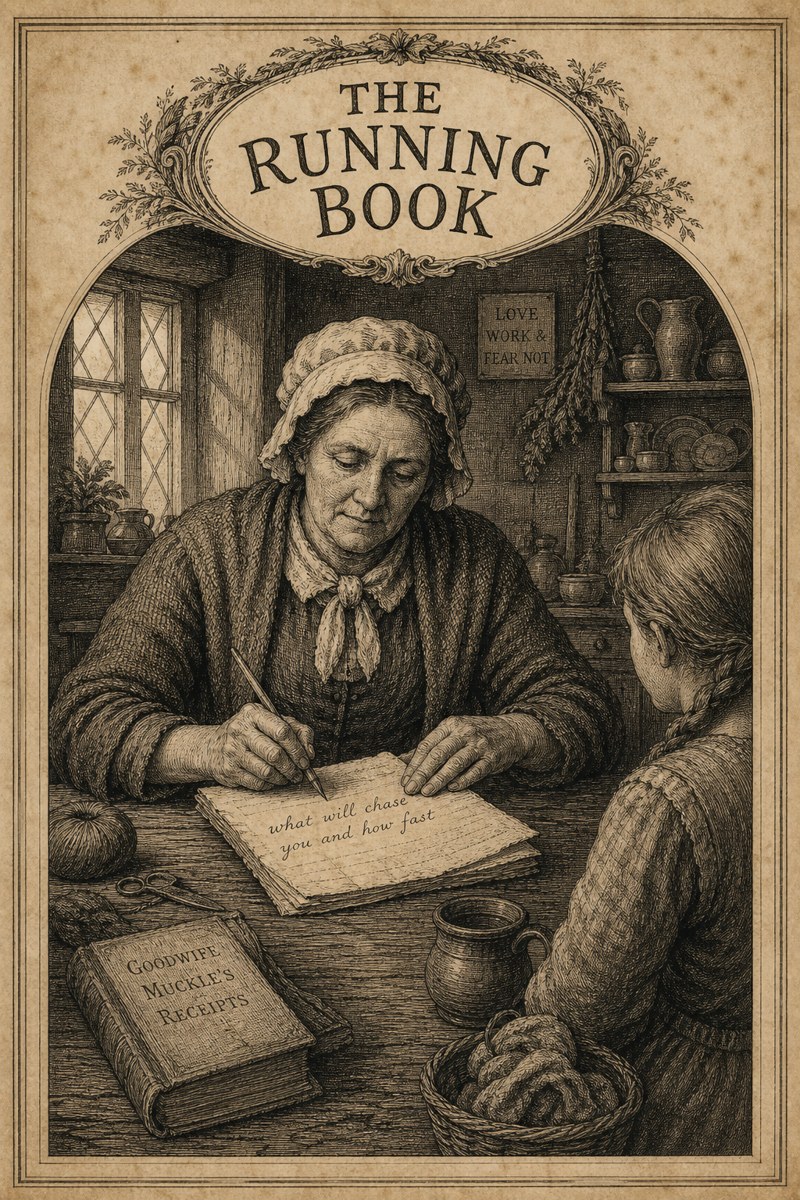
THE RUNNING BOOK
Contents
- I. THE BOG-BOGGART
- II. BARNABY'S BANE
- III. THE LIAR'S UNICORN
- IV. THE MIRE
- V. AND SO — THE THING AT THE END OF THE BOOK
- ONE. A GROWN-UP WHO NEEDS A CHILD'S HELP IS LYING.
- TWO. IT IS NOT A SECRET IF YOU CAN TELL YOUR MOTHER.
- THREE. ASK HIM TO COME AND SAY IT AT THE DOOR.
- It has no name. It has never had a name. Every attempt to give it one has been quietly abandoned, generally within the week, generally by someone who then could not remember starting.
- WHAT IT DOES
- THE TEST, AND IT IS THE ONLY ONE THAT WORKS
Woooozniak's Almanac will tell you what a thing IS. Captain Quail will tell you what a thing MIGHT do. Goodwife Muckle will tell you how to live NEAR a thing.
This book tells you whether you can outrun it. That is all it does. It is the only book on this shelf that has ever saved anybody.
## RULE THE FIRST, TAUGHT BEFORE ALL OTHERS
There is an old saying, and it comes from the dry countries, and it goes like this:
> "You do not need to outrun the bear. You only need to outrun your friend."
We do not teach that here.
We have heard it. A gentleman said it at a supper once, and laughed, and looked about the table for the company to laugh with him, and the company did not.
In Sogmarsh, a child who runs faster than her friend and arrives at the door alone is not a survivor. She is a girl who will be standing in a warm kitchen in about ninety seconds' time, with her hand on the latch, listening.
We would all rather be a little slower and all get in. That is not a moral. That is a technique, and it works, and the reason it works is written at the end of this book, and you are not to skip to it.
## THE TABLE OF RUNNING Learn it as a rhyme. The rhyme is at the back. This is the plain version, for the parents.
| The thing | Can you outrun it? | What you actually do | |---|---|---| | The Bog-Boggart | No. Not over ten yards. Not over one. | Do not run. Do not look in its eyes. Do not take the pail. Walk — walk — to firm ground. It cannot follow you off the wet. | | Barnaby's Bane (the werewolf) | Yes, easily, and this is the great secret of the moor. | Stand still and let him sneeze. He is enormous, he is tragic, and he is allergic to the entire county. He has never caught anybody. He has never tried. | | The Liar's Unicorn | It will not chase you. It will invite you. | Refuse the door. However warm the kitchen looks through it. However much it looks like your kitchen. | | The Hoarding Dragon | Yes. He will not pursue. | He does not want you. He wants the thing in your hand, and he will keep it forever, and he will not enjoy it. | | Mistress Pliers | No, and it makes no difference, and she is not chasing you. | Nothing. Be kind. Leave the broth out. She is not what the children think and she is not what the Arch-Mage thinks either. | | The Shoving Leopard | Yes. Don't. | Take the push. Whatever he has shoved you away from, look at it afterwards, and then go and thank a leopard, which you will feel foolish doing, and do it anyway. | | The Reaping Authority | No. | Nor do you need to. He is late. He is always late. Put the kettle on. | | The Committee | You do not need to. It has never caught anything. | It will follow you for eleven years and then file you. Answer nothing. It survives on replies. | | The Mire itself | NO. | See below. This is the one that gets you. |
## THE ENTRIES PROPER
I. THE BOG-BOGGART
Speed: a slow, unhurried, going-nowhere sort of speed. It does not matter. It has never once needed to hurry.
Understand what it actually does, because the rhyme makes it sound like a monster and it is not. It does not seize you. It does not run you down. It offers you a pail.
It stands in the wet, up to its shins, perfectly calm, and it says — in your Auntie's voice, or your mother's, or, in the worst reported case, in your own — "here, hold this a moment", and it holds out a pail, and it waits, and it is very patient, and the pail is always exactly one step further out than where you are standing.
That is the whole of it. That is the entire creature. It does not drown people. People walk out to it, because a pail is being held, and because the voice is kind, and because it is only one step.
Do not take the pail. Do not take the pail if it is your own mother's voice. Your mother has a pail. Your mother is indoors.
⚠ AND A WORD AGAINST THE OTHER SONG, BECAUSE IT HAS COST US CHILDREN. There is a rhyme — catchier than ours, and sung further, in the chapel gallery and the market square and by children who have never read a word of this book — that tells you, when you meet the Boggart, to run. (You will know it. "Don't Poke the Bog-Boggart"; they put it in the Parish Hymnal, which ought to know better.) It is a very good rhyme. It is beloved. It is wrong, and it is the most dangerous thing sung in this realm.
Read the table again. The Boggart does not chase. It has never, in the whole history of the parish, run a single soul down — it cannot, it stands in the wet up to its shins and holds out a pail. So it does not need you slow. It needs you fast — fast, and frightened, and moving, in the fog, on ground you cannot see, toward a kind voice you trust. A running child is a lost child. The song that shouts run does the Boggart's entire work for it, set to a tune the little ones cannot get out of their heads, and the bog has taken them for it, more than one, more than ten, over the years, and it will take more, because you cannot un-sing a good rhyme once it is in a child.
That is the whole reason for the rhyme in this book, in the yard, with the actions: you never run from a Boggart. You stand. You say the name. You walk — walk — to the firm. And if you learn only one line of one rhyme in your whole wet life, learn that one, and not the pretty one.
(The parish sings the pretty one anyway. It rhymes better. There is the realm entire, on a single line: we will die for a good rhyme, and we will teach it to the children first.)
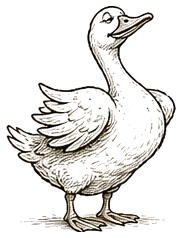
II. BARNABY'S BANE
Speed: prodigious. Terrifying. Entirely theoretical.
Everything you have heard is true except the part that matters. He is nine feet at the shoulder, he can cover open moor at a speed no horse in the realm can hold, and he has never harmed a living soul.
He is allergic to the moor. To the heather, the peat-dust, the wet gorse, the bracken, the sheep, and — this is the tragedy of him — to the smell of a human being, which brings on such a fit of sneezing that he must sit down in the wet and put his head in his enormous hands.
The correct response to Barnaby's Bane is to stop, and stand, and wait. He will come at you like the end of the world. He will get within perhaps thirty yards. And then the county will get into his nose, and he will sneeze, and sneeze, and sit down, and look at you with an expression of such profound and personal apology that many people report finding it worse than being eaten.
Children are taught to say "bless you" and walk on. He appreciates it. Nobody knows how they know that, but everybody does.
III. THE LIAR'S UNICORN
Speed: irrelevant. It will never take a single step towards you.
The most dangerous thing in this book, and it does not chase, and it does not touch you, and it will not so much as raise its voice.
It opens a door.
And through the door, you will see a room, and the room will be warm, and it will be the right room — whichever room that is for you, and it knows which one, and that is the horror of it. A kitchen with the pot on. A chair by a fire. Somebody at the table who is not there any more.
And it is a lie, and there is no room, and what is on the other side is not a country. It is a filing system.
The parish sings about it, in a drinking song, which is the only warning anybody has ever needed: it is a ledger with hooves, and if you step through its door you will be cross-indexed.
Refuse the door. Refuse it standing in the cold and the rain, with your boots full of water, refuse it. The cold is real. The room is not.
IV. THE MIRE
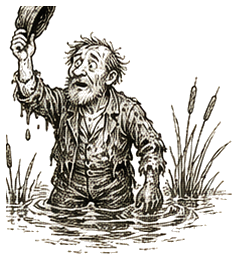
Speed: none. It does not move at all. It has killed more of this parish than every creature in this book combined, and every creature in Woooozniak's, and the castle.
Here is the entry the gentlemen leave out, because it is not a monster, and there is no story in it, and it will not make a child squeal in a warm room.
The ground.
It does not chase. It does not offer. It does not open a door or hold out a pail or sneeze. It simply is not where you thought it was, and it is very cold, and it is patient in a way that nothing alive can manage, and it does not care in the slightest who you are or how fast you can run.
You cannot outrun it, because it is not behind you.
It is underneath you.
Learn the marks. Learn the ground. Learn which green is a field and which green is a lid. There is no cleverness here and no bravery and no bargain to be struck; there is only knowing, and being taught, and being told, and having somebody near enough to hear you when the ground goes.
V. AND SO — THE THING AT THE END OF THE BOOK
We said you were not to skip to this, and if you have skipped to it, go back, because it will not mean anything yet.
Now.
Look again at the table. Look at all of it. Almost nothing in this book can actually be outrun.
The Boggart doesn't need to be fast. The Unicorn doesn't move. The Mire is under your feet. Mistress Pliers isn't even chasing you. The Reaper is always late. And the one thing that can be outrun — poor enormous Barnaby — was never going to hurt you in the first place.
So the running is not the point, and it never was, and the book is a lie in its title, and the mothers know it, and they teach it anyway, in a rhyme, with actions, in the yard.
Because here is what actually happens.
The Boggart holds out the pail — and somebody behind you says your name, and the voice breaks, and the pail is just a pail, and you step back onto the firm.
The Unicorn opens the door onto the warm room with the person in it — and a hand takes your elbow, and you are eleven years old and furious about it, and you are alive.
The ground goes — and somebody is close enough to hear it go, and lies flat, and gets a stick out, and swears at you the entire time, and does not let go.
That is the whole book. That is the whole of Sogmarsh, in one sentence, and here it is:
> Nothing in this realm can be outrun. Everything in this realm can be survived, if somebody is standing near enough to say your name.
You do not need to be fast, child. You need to not be alone, and you need to make sure nobody else is either — and that second part is the part the gentlemen never learn, and it is why the moor keeps eating them, and it is why it does not eat us.
Now say the rhyme. All of it. Loudly, so the small ones hear.
## THE RHYME (Sung in the yard. Actions in brackets. The last line is shouted, and it is shouted together, and that is not decoration — it is the lesson.)
> Don't take the pail! (hands behind back) > Don't take the door! (eyes shut tight) > Bless you, Barnaby! (a great sneeze) > Mind the floor! (stamp — and the floor is the bog, and the floor is a lie) > > The Reaper's late, (a slow shrug) > the dragon's sad, (a hand on the heart) > the leopard's rude (a good hard shove at your neighbour) > but not so bad! > > You can't run fast, (running on the spot, going nowhere) > you can't run far, (slower) > so hold a hand (and here every child takes the hand of the child beside them) > > AND SHOUT WHERE YOU ARE! > > (and they do — all of them, at once, at the top of their lungs, and the rooks go up off the chapel, and > that is the end of the lesson, and it is the only lesson, and it has never once failed.)
# THE SECOND HALF OF THE RUNNING BOOK ## The Ones That Do Not Chase.
The mothers teach the first half in the yard, loudly, with actions, and the children laugh.
They teach this half indoors. Quietly. One child at a time. And they do not laugh, and they do not frighten, and every mother in this parish has had to find her own way to say it, and every one of them has said it, and if you are old enough to walk to the well on your own then somebody has already said it to you.
Here it is, written down at last, so that it is said properly, and said the same, and said to everybody.
## THE RULE THAT SITS ABOVE ALL THE OTHERS
Everything in the first half of this book is a monster. Look at them. A nine-foot wolf. A thing standing in the wet holding out a pail. A white horse with a door in the air behind it.
They look like what they are. That is the great courtesy of monsters, and we do not thank them for it nearly enough.
Now here is the plain fact, and it is the reason this second half exists, and it is written in the front of every parish register in Sogmarsh in the same six words:
> ### NOTHING IN THAT BOOK KNOWS YOUR NAME.
The Boggart does not know your name. It borrows a voice, and it guesses, and if you listen properly you will hear it guess wrong — it will call you love, or pet, or little one, because it does not know, and it cannot know, and it never will.
So if the thing in front of you knows your name — it is not a monster.
It is a person.
And people are the other half of this book, and they are harder, because there is no rhyme for them and no sneeze and no firm ground to step back onto, and they do not chase you.
They do not need to. They ask you to come.
## WHAT THEY ACTUALLY LOOK LIKE Not a warning. A description. Learn it the way you learned the marks.
They are kind. This is the first thing and the hardest thing and no child believes it until it happens. They are not sneering, they are not grabbing, they are not what the pictures in the almanac look like. They are pleasant. They are often the pleasantest person you have met all week, and in a wet parish in a bad winter that is a very great deal.
They have something you want, and it is never sweets. It is a position. An apprenticeship. A word put in for your mother. A place at the castle, out of the rain, with a wage. In Sogmarsh they do not need sweets — they have dry socks, and a warm cart, and a job.
They know things about you. Your name. Your number, if you have one. That your father is ill. That the roof is bad. That you have been standing in the wet looking at the castle wondering how you get in. They have taken the trouble to find out, and the trouble they took is not a kindness. It is a preparation.
And they will say the one sentence, and it is always, always the same sentence, in every account, for six hundred years:
> ### "Don't tell anyone yet — we'll surprise them."
## THE THREE THINGS. LEARN THEM. THEY HAVE NEVER FAILED.
ONE. A GROWN-UP WHO NEEDS A CHILD'S HELP IS LYING.
Not sometimes. Not mostly. Lying.
They will ask you to help find a dog. To carry something. To show them the path, because they are lost, and you know the moor so well, don't you, clever thing.
Grown-ups have other grown-ups. A man who genuinely needs help on this moor goes to the nearest door and knocks on it, because that is what everybody in this parish does, because it is what we are for.
A grown man asking a child, alone, on a path, is not lost.
He is doing the only thing he can do, which is the thing that requires you to be by yourself.
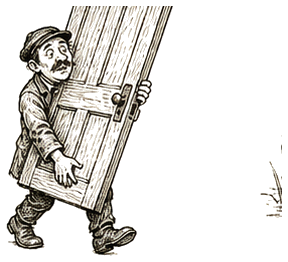
TWO. IT IS NOT A SECRET IF YOU CAN TELL YOUR MOTHER.
That is the whole test and it fits in one line and it has saved more children than every charm and horseshoe and hung-up hagstone in the county.
A treat you can shout about is a treat.
A treat you must go quiet about is not a treat. It is a debt — and this parish knows exactly what a debt is, and exactly who it belongs to in the end, and it is never the person who was smiling when it was handed over.
If somebody gives you a thing and takes your telling away in the same breath, they have not given you anything. They have bought something. Work out what.
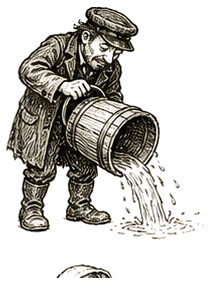
THREE. ASK HIM TO COME AND SAY IT AT THE DOOR.
This is the one. This is the one you use when your head is confused and the man is kind and the cart is warm and everything he has said sounds reasonable, and you cannot think what is wrong, and something is wrong.
You say: "Come and say that to my mother."
And you watch what he does with his face.
A good man's face will light up. He will be delighted. He will walk you home himself, because he has nothing whatever to hide and he would like the credit, and grown-ups do like the credit. He will get there before you do.
And the other kind will begin to explain.
He will explain why not. It will be a good explanation. It will be gentle, and it will be sensible, and it will have a reason in it, and while he is giving it to you he will still be smiling.
You do not need to hear the end of it.
The explaining IS the answer. Go. Now. Mid-sentence. Be rude. Be wrong. Run to any door in this parish and it will open, because every door in this parish opens.
## AND NOW THE PART THE MOTHERS WERE ALWAYS GOING TO SAY LAST
Suppose you did not do the three things.
Suppose the man was kind and you were cold and the cart was warm. Suppose you took the sweet, or the coin, or the promise about your mother's roof. Suppose you went a little way. Suppose you went a long way. Suppose you told him yes, and meant it, because he was the pleasantest thing that had happened to you in a wet month, and you were glad, and you would like somebody to understand that you were glad.
Suppose you kept it quiet afterwards, for a day, or a year, or forty years, because he said not to tell and then — worse, and this is the true cruelty of the whole machine — because after a while you did not want to, because you thought it would be YOUR name in the ledger.
Come home.
That is it. That is the entire ending of this book and there is nothing after it.
You are not in trouble. You were never in trouble. It is not possible for you to be in trouble; there is no arrangement in this parish under which a child ends up in trouble for this, and there never has been, and if you have been lying awake working out how much trouble you are in, then you have been doing arithmetic that has no answer, because the sum was never yours.
He did the thing. Not you. He did it on purpose, and he did it carefully, and he chose the wet week and the bad roof and the child standing on her own — and that choosing is the whole of the crime, and none of the choosing was ever yours.
You are not spoiled, or spent, or crossed out. You are not a debt. You do not owe him the quiet and you never did, and the quiet was the only thing he actually got, and you can take it back tonight, at any door in this parish, and the door will open, and there will be a pot on.
Say it out loud.
Say it badly. Say it forty years late. Say it to your mother, or to somebody else's mother, or to the Sexton, or to the woman who mends the nets and has been dead for sixty-one years and will know exactly what to do, because she always does.
You do not have to have it worked out. You do not have to be sure. You do not have to be able to prove it, or name it, or say it in the right words, and you are permitted to be wrong.
You only have to say where you are.
## AND SO, THE LAST WORD, WHICH IS THE SAME AS THE FIRST
The first half of this book taught you a rhyme, and the rhyme ends AND SHOUT WHERE YOU ARE, and you shouted it in the yard with the rooks going up off the chapel, and you thought it was about bogs.
It was never about bogs.
> The monsters of this realm cannot be outrun, and do not need to be, because somebody will always be near enough to say your name. > > The men of this realm do not chase you at all. They ask you to come away where nobody can. > > And so the whole of it — the whole of Sogmarsh, the whole of what we are and the only thing we have ever been better at than the people up at the castle — is this: > > # WE DO NOT GO ANYWHERE ALONE, AND WE DO NOT LET ANYBODY TAKE US SOMEWHERE ALONE, AND WHEN WE ARE FRIGHTENED WE SHOUT WHERE WE ARE.
That is all. That is the book.
Now go and take the hand of the child next to you, and go out, and be extremely loud in the yard, and mind the bucket.
## AND ONE MORE, WHICH THE MOTHERS CANNOT DESCRIBE
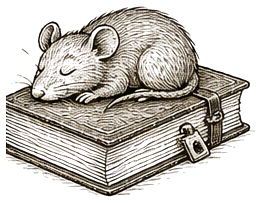
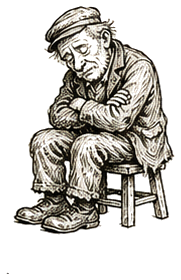
It has no name. It has never had a name. Every attempt to give it one has been quietly abandoned, generally within the week, generally by someone who then could not remember starting.
There is a last thing in this book and it does not belong in either half, because it does not chase you and it does not ask you to come.
It does not want anything from you at all.
And when the mothers get to this part they go quiet, and look at the fire, and say something like "and then there's the other thing" — and then, very often, they do not finish the sentence, and the child does not notice that they did not finish it, and neither do they.
That is not a figure of speech. Read it again.
WHAT IT DOES
Nothing.
That is the entry. That is genuinely the entry, and it is the most frightening entry in this book, and it has taken the parish six centuries to work out how to write it down at all.
Here is the nearest anybody has come.
You will be going somewhere. Not anywhere important — the well, the far field, the Long Kitchen, your sister's. You will be on your way, and you will have a reason, and the reason will be a perfectly good one.
And then you will sit down.
And it will be pleasant. That is the thing nobody believes until it has happened to them: it is not horrible. There is no cold hand and no voice and no door. It is a warm afternoon and a good place to sit and you have had a long week and there is really no hurry.
And the thing you were going to do will still be there. It will just stop mattering.
Not urgently. Not tragically. It will simply become a thing you will get to — and you will believe that, completely, and you will be quite content to sit a little longer, and the errand will slip further off the way a dream slips off in the morning, because the wanting goes first, and it takes the remembering with it.
Six hundred years, this parish has watched it happen. To surveyors. To scholars. To three of the Delve who were going to dig somewhere they had been told not to, and who instead spent a very agreeable afternoon discussing whether they would, and never in the end got round to it.
Nobody has ever been dragged off by it. Everybody it has caught simply sat down, and was glad of the rest, and could not afterwards tell you where they had been going, because the going was the first thing to go.
THE TEST, AND IT IS THE ONLY ONE THAT WORKS
You cannot outrun it. You cannot refuse it, because it does not ask. You cannot tell it to come and say it at the door, because there is nothing there to come.
So the parish does the only thing the parish has ever done, which is the thing this whole book is about:
> ## SAY OUT LOUD WHERE YOU WERE GOING.
That is all. Out loud. To another person if there is one, and to the empty air if there is not, and to a sheep if it comes to that, and Sogmarsh is not a parish that will judge a man for briefing a sheep.
"I was going to the well." "I was going to dig at the third mark." "I was going to my sister's, because she is ill, and I said I would."
And nine times in ten you will hear yourself say it — and stand up — and be furious, in a bewildered sort of way, for about ten seconds, and then walk on, and the afternoon will simply be an afternoon again.
The parish does not know why this works. The parish has never known why this works. The parish has been doing it for six hundred years because it works, which is the only reason anybody in Sogmarsh has ever needed for anything.
And that is why we teach the small ones to shout where they are, in the yard, at the top of their lungs, until the rooks go up off the chapel.
We tell them it is for the bog.
It is not only for the bog.
Goodwife Muckle's marginal note, in the parish copy, in a hand that presses hard:
> I have written this entry four times. Three of those times I did not finish it, and put the pen down, > and had a very pleasant afternoon. > > This time I told the whole kitchen what I was doing before I sat down, and made them promise to ask me > about it at supper, and they did, and I was cross about it, and here it is. > > That is the entry. That is the method. Tell somebody what you are about to do, and let them be > annoying about it. > > It is the whole of the parish, and it fits on a spoon.