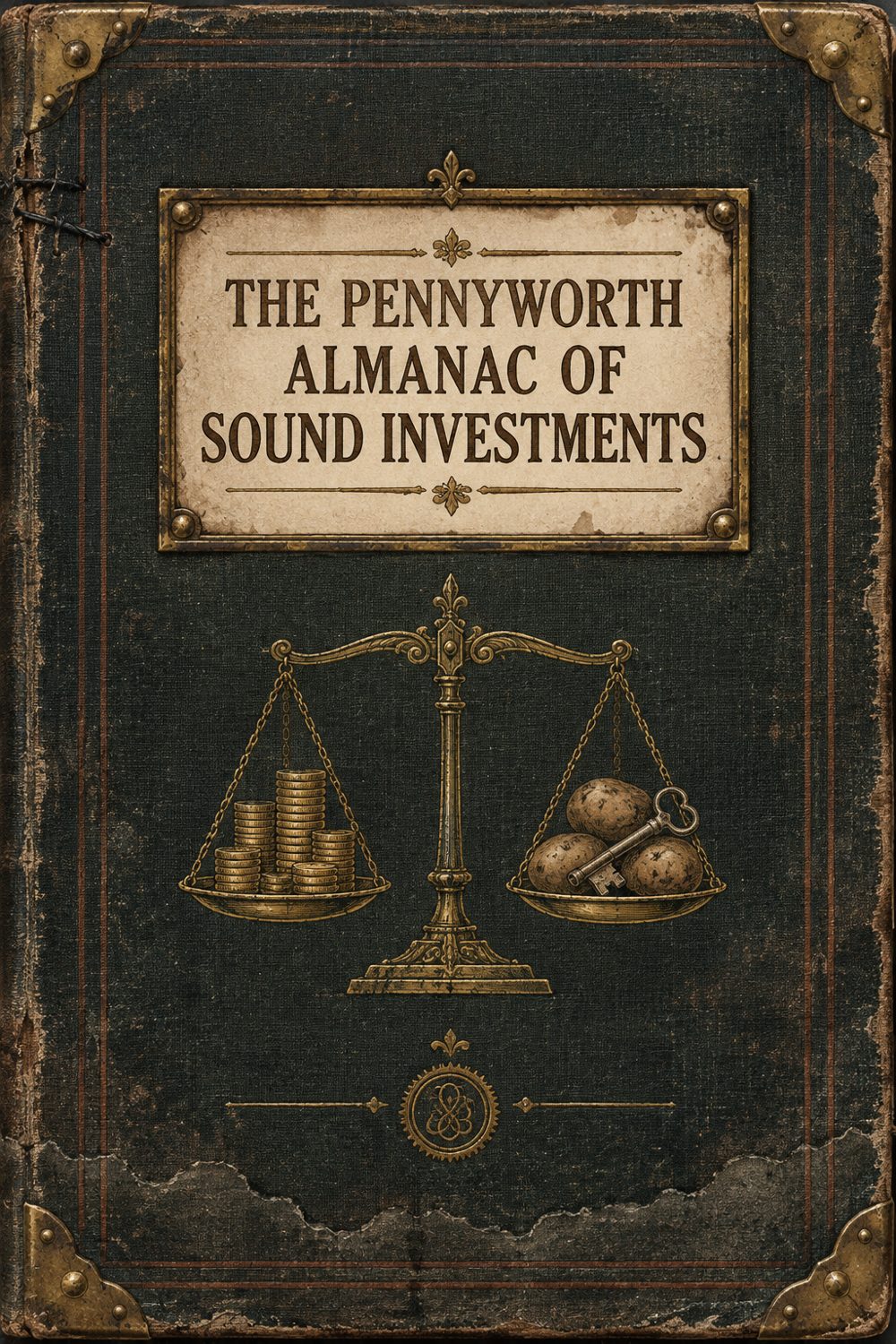
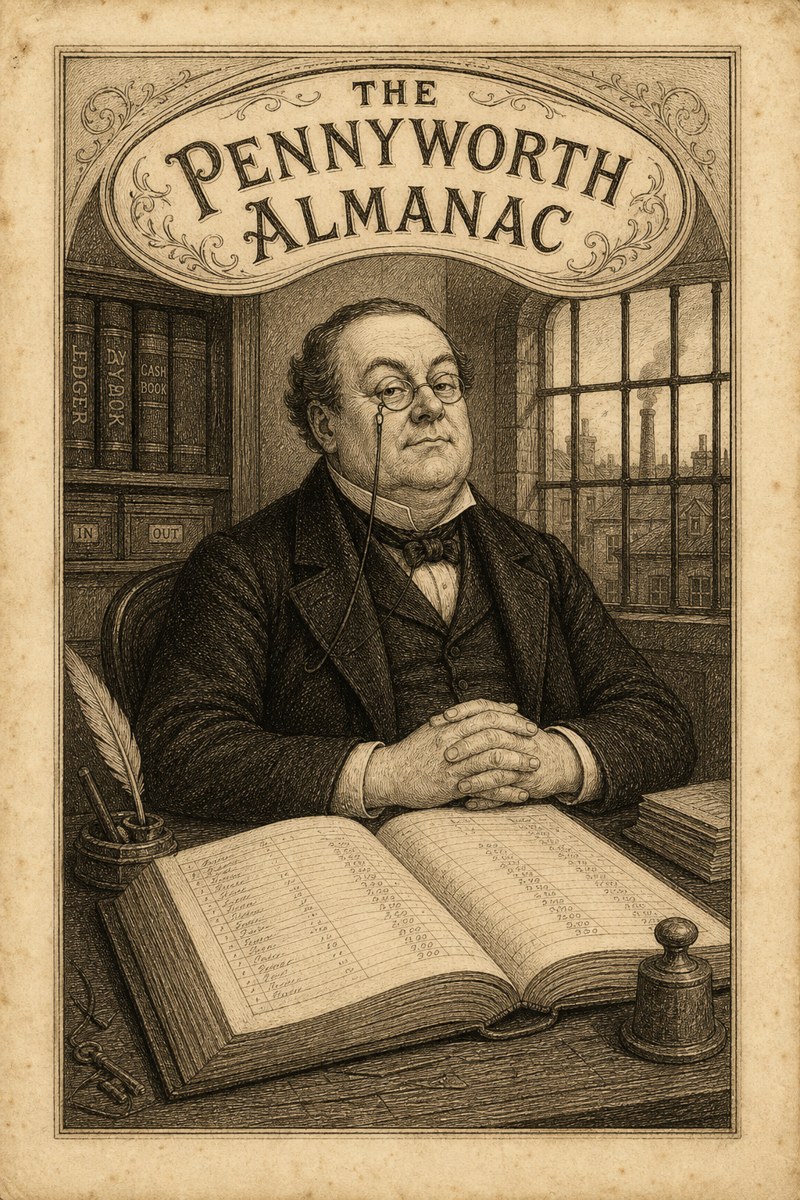
THE PENNYWORTH ALMANAC OF SOUND INVESTMENTS
Contents
A Foreword, Unsentimental
The sage Woooozniak catalogues things for their meaning, which is why he dies poor. We catalogue things for their value, which is why we own his publisher. Every entity in the realm is, correctly understood, a line in a ledger — an asset to be realised, a liability to be offloaded, or a debtor to be patient with. There is no folklore here. There is only what a thing is worth, and to whom, and by when. Sentiment is recorded only where it affects the valuation.
Each entry: The Asset · The Assessment · The Bottom Line.

1Castle Bastable
The Asset. A six-hundred-year-old fortified property, structurally unsound, spiritually mortgaged, and presently sinking at one inch per annum. The Assessment. A depreciating asset that has achieved the remarkable feat of becoming un-repossessable: it breaks the laws of physics and zoning, so no bailiff will enter it. We hold the debt but cannot take the door. The Bottom Line. The only thing harder to sell than a worthless asset is a worthless asset nobody will collect.
2The Potato Standard
The Asset. A regional fiat currency. Denomination: the potato. Backing: lunch. The Assessment. A currency that loses value simply by existing in the same room as reality. We do not recognise it; the Exchequer does not recognise it; in private moments we suspect the potatoes themselves are beginning to have doubts. The Bottom Line. A currency is only a story everyone agrees to keep telling. This one is a story told by one bankrupt man to a vegetable.
3The Unpayable Debt (the 1478 ledger)
The Asset. The founding loan: Reginald Bastable won the building at cards in 1478 but never the money. The shortfall has been ours, compounding, ever since. The Assessment. The perfect product. A debt that can never be settled is a debt that never stops earning. We have, candidly, no wish to ever be repaid; repayment would end the relationship. The Bottom Line. The ideal customer is not the one who pays. It is the one who can't, forever, and apologises for it.
4The Tithe (the Exchequer's claim)
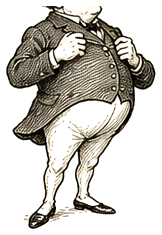
The Asset. A competing creditor — the Crown's Collector, who takes not coin but deeds to wings. The Assessment. Inefficient and theatrical. He repossesses real estate that, as established (Entry 1), cannot be physically held. We prefer to own the number; let him own the haunted corridor. The Bottom Line. Amateurs seize the property. Professionals seize the obligation.
5The Ten-Potato Ransom
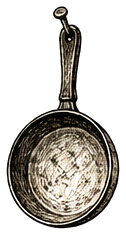
The Asset. One (1) Lord Bastable, taken; redemption price, ten potatoes. The Assessment. A flawless valuation. The market has, with rare honesty, priced a hereditary lord at ten root vegetables — and everyone, the kidnappers included, considers it an overpayment. The Bottom Line. The market is never crueller than when it is correct.
6Goodwill (House Bastable's)
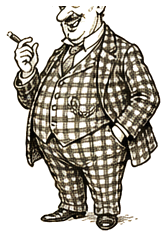
The Asset. Intangible. The accumulated reputation, charm, and standing of the Bastable name. The Assessment. On inspection, the charm is real and the standing is fictitious. Recoverable value: the half-second between Lord Bastable smiling at you and you checking your purse. The Bottom Line. Charm is a loan the charming never intend to repay; book it as a loss on receipt.
7The Crown Engine
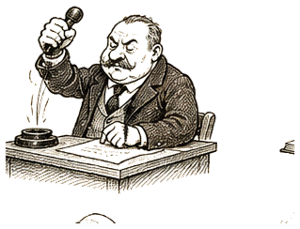
The Asset. [REDACTED — pending valuation.] The Assessment. We cannot price it. It is the only object in the realm whose worth our models return as infinite or undefined, which our models are not built to survive. A thing that cannot be valued cannot be securitised, insured, or safely owned — and an asset you cannot value is not an asset. It is a hazard with a deed. The Bottom Line. The most dangerous line in any ledger is the one you can't make a number.
8The Order of Quill (the convent, valued)
The Asset. Forty-one standing offices, staffed by women who take no wage, own nothing, and cannot be dismissed because they were never hired. They keep the parish's sick, its unburied, its children in charge of households, and its dying alone. Annual cost to this house: nil. Annual cost to the estate: nil. Annual cost to the Crown: nil. The Assessment. The single finest position in the ledger and we did not have to open it. Every soul the Sitting attends is a soul the parish is not obliged to notice; every winter the Warm Room burns its own charcoal is a winter the estate is not asked for fuel; every grave the Last Attendance fills is a pauper's funeral nobody has to be ashamed into paying for. The Order does not relieve the realm's misery. It absorbs it — quietly, at its own expense, in a building nobody visits — and an absorbed misery generates no claim. We calculate the arrangement suppresses parish liabilities by some eleven hundred sacks a year and has done so, uninterrupted, since 1547. The Standing Recommendation. That the Order continue to receive nothing. We have modelled the alternative and it is ruinous. A funded order is an audited order; an audited order has a budget, and a budget has a line, and a line can be questioned in Chapter, costed, capped, and — this is the danger — compared against the cost of draining the ground. Charity is the only form of relief that never prompts anyone to ask what it is standing in for. Fund these women and within a generation somebody will produce a figure showing it would have been cheaper to fix the bog in 1602, and then the bog gets fixed, and then the forty-one offices close, and the estate inherits every want they were carrying. One caution, entered for completeness. The Damp Visiting is a liability and should be watched. It generates dated evidence. Three landlords have already been brought to repair by it, at cost, and the instrument used against them was not a writ or a riot but a woman with two hygrometers who was awake at four in the morning. Evidence is the only asset the poor have ever successfully accumulated. The Bottom Line. A volunteer is simply a cost you have persuaded somebody else to carry, and gratitude is the cheapest currency ever minted — not even the potato is so poorly backed, and no coin in the realm buys so much labour from so many good women for so long.

9A Debtor's Sentiment (appended in the cleaner hand)
The Asset. None. This entry has no financial subject. The Assessment. In the lower quarters I found a labour-log proving the servants paid off this castle's mortgage three times over in uncompensated misery, and were charged interest on their own suffering. The figures are, technically, beautiful. I have looked at a great many ledgers. This is the first one I wish I had not balanced. The Bottom Line. Every account comes out even eventually. That is the horror of accountancy, and occasionally its conscience. — J.P.